Agustín Carlevaro: The Architect Who Played Tango on Solo Guitar
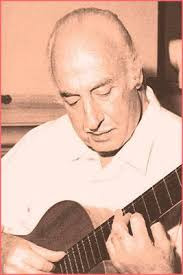
Agustín Carlevaro spent his working life as an architect in Montevideo and became, late in life, one of the most admired interpreters of tango on the solo guitar.
At a glance
- Born in Montevideo on 6 January 1913; died there on 12 May 1995
- Architect, guitarist and arranger; studied the guitar with Pedro Vittone
- Accompanied Horacio Ferrer on Romancero canyengue (1967); own LPs from 1972, among them Las estaciones and Recital de tango
Fuente original: «Efemérides tangueras (enero)» (Efemérides tangueras, Club de Tango) · Resumen en español ↓
Most tango guitarists made their living accompanying singers. Agustín Carlevaro did not make his living from music at all. He was an architect in Montevideo, and the guitar was, for most of his life, a passion he shared with friends and students. Only in his fifties did he begin to record, and the dozen LPs that followed made him one of the reference names for tango played on a single guitar, without a singer. The old Club de Tango anniversary calendar, Efemérides tangueras, gives him a short entry under 6 January. This page combines it with the catalogue of the Centro de Documentación Musical of Uruguay’s National Library and with Uruguayan press coverage.
What the calendar records
The calendar notes that the architect, guitarist and arranger Agustín Carlevaro was born in Uruguay in 1913, and that he studied the guitar with the teacher Pedro Vittone. It says he recorded about twelve LPs for different labels, the first of them in 1972. It then quotes Juan Carlos Legido, who considered him one of the most refined and inspired interpreters of tango, unusually strict in choosing his pieces and gifted with a restrained emotion (our translation).
The Centro de Documentación Musical (CDM) of the Biblioteca Nacional de Uruguay gives the full dates: born in Montevideo on 6 January 1913, died in Montevideo on 12 May 1995. It describes him as a solo guitarist, concert performer and arranger, and as an architect, and dates his known career to the 1960s through the 1990s.
A guitarist among guitarists
His younger brother was the guitarist Abel Carlevaro (1916–2001). The CDM records that in the mid-1930s both brothers went to hear the guitarist Alberto Gallotti, known as Bachicha, at a Montevideo venue called La Trufa. Bachicha played milongones, a Uruguayan form of the milonga, which he had learned as a young man from Afro-Uruguayan musicians. Abel and Agustín later recorded some of these milongones with the guitarist Julio Fontela.
In 2001, six years after his death, the Montevideo daily La República announced a tribute to him at the University of the Republic. The paper described him as a founder of the Centro Guitarrístico del Uruguay, a promoter of the Club de la Guardia Nueva and a constant collaborator of Joventango, the Montevideo tango association. It also remembered him as a tireless adviser to anyone who played the guitar. His own taste, according to the article, ran from Tárrega, Albéniz and Bach to the tangos of Troilo, Gardel, Pugliese and Piazzolla.
Horacio Ferrer and Piazzolla
Carlevaro’s first appearance on record was as an accompanist. In 1967 the poet Horacio Ferrer recorded Romancero canyengue for the independent label Trova, reciting his poems to Carlevaro’s guitar. According to the journalist Julio Nudler, in his biography of Ferrer on Todotango, it was this record that led Astor Piazzolla to invite Ferrer to write with him. The CDM lists the album as Horacio Ferrer dice su Romancero canyengue con la guitarra de Agustín Carlevaro (1967).
La República adds that Carlevaro and Piazzolla were close friends, that Piazzolla entrusted him with guitar arrangements of many of his works, and that much of the music of the tango opera María de Buenos Aires, by Piazzolla and Ferrer, is said to have been written under his watchful eye. The paper reports this last point as something people maintain, not as a documented fact.
The solo records
The CDM lists his own records as follows:
- Las estaciones (1972)
- Recital de tango (1974)
- Marrón y azul (1976)
- María de Buenos Aires (1978)
- Agustín Carlevaro interpreta a Astor Piazzolla y Juan Carlos Cobián (1979)
- Mi guitarra (1987)
- Homenaje a Atilio Rapat (1989)
- Sólo Piazzolla (1992)
- a compilation of Piazzolla recordings made between 1971 and 1991, and a 2001 edition of Recital de tango
The first date matches the calendar, which places his first recording in 1972. The list shows how central Piazzolla was to his repertoire, alongside the older tango of Cobián.
La República describes his versions as romantic in content, and says that the way he accented musical phrases revealed a performer with a solid guitar training. Many, the paper adds, considered him the most exquisite interpreter of tango on solo guitar. He called his instrument la rubia, “the blonde”.
Why dancers might listen
Solo guitar tango is not dance-floor music in the usual sense, and Carlevaro’s records were made for listening. But for dancers who want to hear the melodic and harmonic bones of a tango, without the drive of an orchestra, his arrangements are a clear way in. He belongs among the tango artists whose influence passed less through the milonga than through other musicians.
Sources
- “Efemérides tangueras (enero)”, Club de Tango (clubdetango.com.ar). Archived copy (archive.org, 2013) (birth in Uruguay in 1913, architect, studies with Pedro Vittone, about twelve LPs, first recording in 1972, Juan Carlos Legido’s judgement).
- Centro de Documentación Musical, Biblioteca Nacional de Uruguay, “Guitarristas en el Uruguay por orden alfabético” (dates and places of birth and death, roles, career period, the 1967 Ferrer album, list of his own records; entries on Alberto Gallotti Bachicha and Julio Fontela for La Trufa and the milongones; Abel Carlevaro’s dates).
- Julio Nudler, “Horacio Ferrer”, Todotango (Romancero canyengue, 1967, label Trova, with Carlevaro’s guitar; Piazzolla’s invitation to Ferrer).
- “El talento del maestro”, La República (Montevideo), 16 November 2001 (architecture career, Centro Guitarrístico del Uruguay, Club de la Guardia Nueva, Joventango, repertoire, friendship with Piazzolla and María de Buenos Aires, style, la rubia, the 2001 tribute).