Eladia Blázquez: The Songwriter Who Brought Tango Up to Date
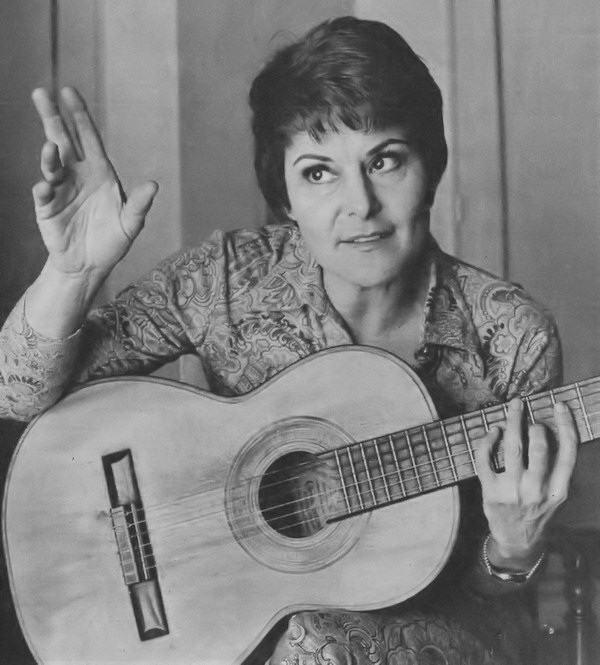
Eladia Blázquez sang Spanish and folk songs as a child, wrote boleros, and from around 1960 became one of the few new voices to write lasting tangos about Buenos Aires.
At a glance
- Born on 24 February 1931 in Avellaneda (some sources say Gerli), Buenos Aires province; died on 31 August 2005 in Buenos Aires
- Sang Spanish and criollo songs as a child, then wrote boleros and folk songs before turning to tango around 1960
- Author of Sueño de barrilete, El corazón al sur and Honrar la vida; Konex de Platino in 1995 and 2005
Fuente original: «Eladia Blázquez» (Club de Tango, 2002) · Resumen en español ↓
Eladia Blázquez (1931–2005) arrived in tango late and from outside. She had sung Spanish songs, boleros and folk music before she wrote her first tango, and she began at a time when the genre had lost much of its audience. Yet she became one of the very few tango artists of the second half of the twentieth century whose new songs entered the common repertoire. Singer, pianist, guitarist, composer and lyricist in one person, she wrote about Buenos Aires as it was in her own day. The old Club de Tango site kept a short portrait of her, built from her own words and from tributes by three writers. This page retells it and adds what independent sources record.
A child singer from the south
According to the Club de Tango portrait, her mother was Andalusian and her father came from Salamanca. The tango writer Antonio Rodríguez Villar, a close friend, names her mother’s home town as Granada. Eladia Blázquez was born on 24 February 1931, a date given by the Todotango biography by Julio Nudler and by the Konex Foundation. Nudler and the journalist Guillermo Alfieri (Revista El Sur, 2015) place her birth in Avellaneda, south of the capital; a 2025 profile by Argentina’s Secretaría de Cultura gives Gerli, in the province of Buenos Aires. Rodríguez Villar remembers a neighbourhood where luxury was unknown, and Nudler notes that even after she moved to the well-off Barrio Norte, her heart stayed on the other side.
Music came early. The portrait says that at eight she was already singing on Radio Argentina, mostly Spanish flamenco songs and Argentine criollo songs. Alfieri adds that at four she showed her vocation on a toy piano with eight notes, and that while still at primary school she sang Spanish repertoire at the Buenos Aires tablados El Tronio and Goyescas. Nudler links this start to her parents’ origin and to the large Spanish community of the city. She later told Rodríguez Villar that she had barely finished primary school; she was self-taught in literature as in music.
Boleros and folk songs
Before tango, Blázquez worked in the genres that sold. The portrait lists boleros she sang and composed, among them Novelera and Humo y alcohol, and folk songs such as Río, río. Alfieri writes that her boleros were sung by Daniel Riolobos, that Río, río used a rhythm from the Litoral, and that the group of Chango Farías Gómez popularised her cueca Ya me voy, ya me estoy yendo. The Secretaría de Cultura adds the zamba Al viejo río Paraná and names Ramona Galarza, Roberto Yanés and Los Fronterizos among the artists who recorded her songs. Nudler describes the whole path as Spanish song, then folk music, boleros, tango and finally the ballad.
Turning to tango
In the portrait Blázquez dates her move to tango to 1960. She says she began to write about Buenos Aires almost without noticing, and then understood that tango might be needed more than other genres. Her first tango was Sueño de barrilete. Alfieri dates it to 1960; Nudler says she composed it in 1959 and only made it known in 1968. Alfieri adds that Miguel Saravia recorded it in 1968, followed by Roberto Rufino, Rubén Juárez, Susana Rinaldi and Blázquez herself.
Her first LP of tangos, all her own, came out in 1970, according to Nudler and the Secretaría de Cultura. That year Mi ciudad y mi gente won the Festival de la Canción de Buenos Aires. Nudler names El precio de vencer (1973) among her most questioning songs and El corazón al sur (1976) as her most popular tango. Other titles that have become standards include Honrar la vida, Somos como somos and Prohibido prohibir (Konex Foundation). She also wrote Spanish lyrics for Astor Piazzolla’s Adiós Nonino (Secretaría de Cultura). The Konex Foundation counts more than 200 songs in all.
A new kind of tango song
Her songs spoke of the present. In the portrait she says the Argentine people were maturing and looking for a way to accept themselves, tender and tragic sides alike; she saw herself as a witness of a dark time, and each song as an attempt to hold back the disaster by showing the face of love. Alfieri quotes a similar view: popular poets have a duty to bear witness to what happens to the country.
That stance earned her the nickname la Discépolo con faldas, “Discépolo in skirts”, after the author of Cambalache. Nudler, who reports it, thinks the comparison exaggerated, and he is critical of her praise of Buenos Aires. He still credits her with a genuinely new tango song, outside the avant-garde, that reached listeners far beyond the tango public. Traditionalists, he writes, received her coldly. Infobae’s obituary makes the same point: hers were among the few new tangos with successful lyrics at a historic low for the genre.
Tributes
In 1978, the portrait records, she received the Prensario award. The jury said that no one had captured contemporary reality in the music of Buenos Aires as she had. The page then gathers three tributes. César Tiempo argues that writing tangos is as respectable an art as writing novels and poems, and calls her the first among her peers. Julián Centeya, in a prose poem, makes her the very voice of the city. Cátulo Castillo (1906–1975), poet and lyricist, welcomes her into tango in his own lunfardo-coloured prose and ends by calling her tango itself. Alfieri confirms that it was Castillo who welcomed her into the tango world.
Later honours followed. The Konex Foundation lists two Konex de Platino as best tango author and composer, in 1995 and 2005, as well as a Premio ACE, a prize of the Fondo Nacional de las Artes and the title of Ciudadana Ilustre of Buenos Aires; the Secretaría de Cultura dates the latter to 1992.
Death
Eladia Blázquez died in the early hours of 31 August 2005, aged 74, at the Clínica Bazterrica in Buenos Aires, after a long illness, as Infobae reported the same day. Less than two weeks later, at the Konex awards for popular music at the Teatro Metropolitan, about a hundred musicians, among them Susana Rinaldi and Raúl Lavié, sang Honrar la vida together in a tribute organised by the Konex Foundation and the authors’ society SADAIC (Infobae, 13 September 2005).
Sources
- “Eladia Blázquez”, Club de Tango (clubdetango.com.ar), 2002. Archived copy (archive.org, 2009). Parents, childhood singing on Radio Argentina, boleros and folk songs, turn to tango in 1960, her views on tango, Prensario award 1978, tributes by César Tiempo, Julián Centeya and Cátulo Castillo.
- Julio Nudler, “Eladia Blázquez”, Todotango. Birth date and Avellaneda, Spanish repertoire, Sueño de barrilete (1959/1968), first tango LP and festival prize (1970), El precio de vencer (1973), El corazón al sur (1976), the nickname and critical assessment, Barrio Norte.
- Antonio Rodríguez Villar, “A memory for Eladia”, Todotango. Mother from Granada, father from Salamanca, childhood neighbourhood, schooling, long illness.
- Guillermo Alfieri, “Diez años sin Eladia Blázquez”, Revista El Sur, 31 August 2015. Avellaneda, toy piano, El Tronio and Goyescas, Riolobos, Río, río, Farías Gómez, Sueño de barrilete (1960) and its recordings, Cátulo Castillo’s welcome, her view of the popular poet.
- Secretaría de Cultura de la Nación, “Eladia Blázquez, la poetisa del tango”, 31 August 2025. Gerli, instruments, first tango record 1970, Al viejo río Paraná, performers of her songs, Adiós Nonino lyrics, Ciudadana Ilustre 1992, Konex 1995 and 2005.
- Fundación Konex, “Eladia Blázquez”. Konex de Platino 1995 and 2005, Premio ACE, Fondo Nacional de las Artes, Ciudadana Ilustre, more than 200 songs, list of classic titles.
- “Falleció Eladia Blázquez”, Infobae, 31 August 2005. Date, age and place of death, illness, assessment of her tangos.
- “Emotivo homenaje a Eladia Blázquez”, Infobae, 13 September 2005. Tribute at the Konex ceremony (Teatro Metropolitan, about a hundred musicians, Honrar la vida, organised by Konex and SADAIC).
- Pablo Moreno, “Cátulo Castillo: un artista fundamental”, La Capital (Mar del Plata), 6 August 2016. Cátulo Castillo’s dates (1906–1975).