Rosita Melo and Desde el alma: The Waltz a Teenager Wrote
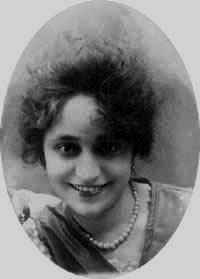
Rosita Melo is known for a single piece: the waltz Desde el alma, written in her teens, recorded by Roberto Firpo and given its lasting lyrics by Homero Manzi in 1948.
At a glance
- Born Clotilde Rosa Mele in Montevideo, Uruguay; the year is uncertain: Ostuni lists 1897, 1900 and 1903, Roberto Selles gives 9 July 1897
- Moved to Buenos Aires with her family as a child; died there on 12 August 1981
- Composer of Desde el alma (written between 1911 and 1917) and of the tangos Oración and Tatita
Fuente original: «Bajo el signo del vals: apuntes para una biografía de Rosita Melo» (Ricardo Ostuni, Revista Club de Tango, 1996) · Resumen en español ↓
Few dancers know the name Rosita Melo, but almost all of them know her music: among the tango artists of the Río de la Plata, she is remembered for a single waltz. Desde el alma (“From the soul”) is one of the best-loved waltzes of the Río de la Plata and a fixture of the vals sets at milongas. Its composer wrote it as a teenager, and for most of her life it was the only thing the public knew about her. In 1996 the writer Ricardo Ostuni collected what little was known in Revista Club de Tango. His article is the basis of this page.
A biography with gaps
Ostuni opens by admitting how little is certain. Rosita Melo was Uruguayan, from Montevideo, and was registered as Clotilde Rosa Mele. Some authors place her birth on 9 July 1897, others in 1900, most, he writes, in 1903; the tango historian Roberto Selles gives 9 July 1897. Around 1906, according to Ostuni, her family settled in Buenos Aires, like many Uruguayan families of the time. Selles dates the move to 1900. Firmer facts only begin in 1922, when she married the young poet Víctor Piuma Vélez.
Whatever the exact year, she grew up at the end of the long age of the waltz. In the Río de la Plata the waltz dominated from about 1840 into the first years of the twentieth century. Ostuni recalls the musicologist Lauro Ayestarán’s point that the waltz changed social dancing: couples who had danced apart now danced in an embrace. Johann Strauss II, who died in 1899, was still the model, and the waltz moved from the salon into the street, where it took on a local, criollo character.
Why Desde el alma is a “vals Boston”
At the end of the nineteenth century another kind of waltz arrived from North America: the vals Boston. Ayestarán described it as stretched and slow, with a gliding step. Ostuni adds an observation by the composer Sebastián Piana. In the Boston, the pianist does not keep the rhythm with the left hand. The right hand carries rhythm and melody together, and the left hand only marks the first beat of the bar, the bass.
The Boston left a deep trace in the region, and Desde el alma is one of the titles that keeps it alive. That is also why the piece feels unhurried, even when orchestras play it for dancing.
Written in her teens
According to Ostuni, everything suggests the waltz was composed between 1911 and 1917. Authors disagree on the date, and Rosita Melo never settled it. She only said it was a work of her adolescence. Roberto Selles places it in 1911, when she was fourteen. Ostuni imagines a girl of fourteen who could not have guessed she was writing something lasting, and who might well have hidden it, since feelings were kept private then. Asked about the piece later in life, she said the girls of her generation were romantic and dreamy, and that she had done nothing but express them.
Firpo, Piuma Vélez and Manzi
By the time she married in 1922, Roberto Firpo had already recorded Desde el alma as an instrumental. Her husband then wrote words for it. Ostuni, who quotes the first verse, finds them weak. The piece had to wait.
It waited until 1948. The actor and singer Hugo del Carril was starring in the film Pobre mi madre querida with the Italian actress Emma Gramatica and needed a song that suited the story. Homero Manzi remembered Rosita Melo’s waltz and, after a diplomatic approach to Piuma Vélez, obtained permission to replace the lyrics. Manzi’s new text speaks to a soul that has been hurt and refuses to forget. Ostuni calls them verses that seem to have existed before they were written, as if Manzi had found them inside the melody. This is the version sung ever since.
Beyond one waltz
Rosita Melo also wrote at least two tangos, Oración and Tatita, but, as Ostuni puts it, her fame has the accent of the waltz. He ends with Borges’s idea that a single line can be enough for immortality. In Rosita Melo’s case, that line is Desde el alma.
Sources
- Ricardo Ostuni, “Bajo el signo del vals: apuntes para una biografía de Rosita Melo”, Revista Club de Tango no. 17, January–February 1996. Archived copy on clubdetango.com.ar (archive.org, 2013).
- Roberto Selles, “Desde el alma, a romantic criollo waltz”, Todotango (birth on 9 July 1897, the move to Buenos Aires in 1900, composition in 1911, Manzi’s lyrics of 1948).