Teresita Asprella: A Tango Singer in 1920s Paris
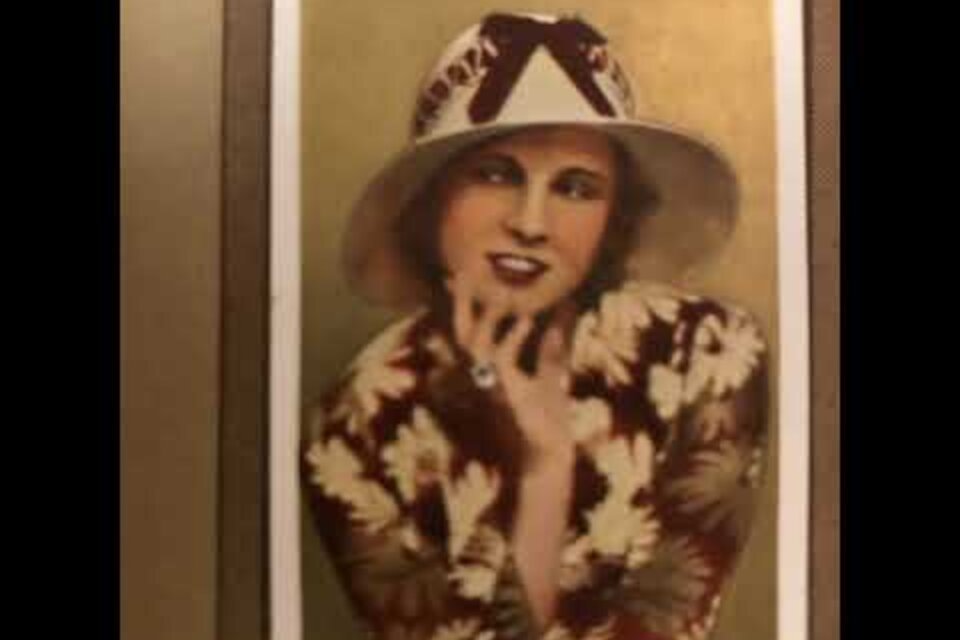
Teresita Asprella, known as La Goyita, sang tango in Paris in the mid-1920s with Eduardo Bianco, Bachicha and Francisco Canaro, then left the stage and was almost forgotten.
At a glance
- Born Teresa Asprella on 17 October 1904 in Monserrat, Buenos Aires; died on 26 September 1954
- Known as La Goyita; sang with the Quinteto de Maestros (1921), Eduardo Bianco, Bachicha, Horacio Pettorossi and Francisco Canaro
- Singer and guitarist of Canaro's orchestra in Paris in 1925; recorded Esclavas blancas and Arrepentida
Fuente original: «Efemérides tangueras (octubre)» (Efemérides tangueras, Club de Tango) · Resumen en español ↓
In the mid-1920s Teresita Asprella was the voice of the orchestras of Eduardo Bianco, Bachicha and Francisco Canaro in Paris, and she recorded there for Odeon. Back in Buenos Aires she slipped out of public life without explanation and died at 49. The old Club de Tango calendar, the Efemérides tangueras, recorded her birth and death in two short entries. The fullest account of her career is a biography by the tango historian Néstor Pinsón on Todotango, which this page follows for everything the calendar does not say.
Monserrat, 1904
The October page of the calendar places her birth on 17 October 1904 in Monserrat, the old neighbourhood beside the Plaza de Mayo in Buenos Aires. It gives her name as Teresa Asprella and sums her up in one line: she was a cancionista, a female tango singer, in Francisco Canaro’s orchestra. She died, the same entry says, on 26 September 1954. Pinsón gives the same dates.
A second calendar entry, on the September page under the day of her death, adds her nickname, La Goyita, and names the orchestras she sang with: those of Eduardo Bianco, Horacio Pettorossi, Saúl Salinas and Francisco Canaro.
According to Pinsón, she studied guitar, violin and singing and began to sing in public very young.
The Palais de Glace and the road to Paris
Her first known engagement, Pinsón writes, came in 1921 with the Quinteto de Maestros, which played at the Palais de Glace in Buenos Aires. The quintet was led jointly by Ángel D’Agostino and Agesilao Ferrazzano, with Alfredo Mazzeo on violin and Ernesto Bianchi and Abel D’Onofrio on bandoneon.
In 1924 Eduardo Bianco took her to Paris, together with Ferrazzano and Juan Pecci, and formed an orchestra for France in which she sang. She also sang in the group of Juan Deambroggio, known as Bachicha, and then in the joint Bianco–Bachicha orchestra.
With Canaro in Paris
In 1925, according to Pinsón, she became the singer of Francisco Canaro’s orchestra in Paris, whose musicians reportedly had to perform dressed as gauchos. She sang and also played guitar. Pinsón lists the line-up: Canaro and Ferrazzano on violins, Carlos Marcucci and Juan Canaro on bandoneons, Fioravanti Di Cicco on piano, Rafael Canaro alternating between double bass and musical saw, and Romualdo Lomoro on drums.
Among the recordings from this period Pinsón names Esclavas blancas, Arrepentida, Cancionero and Tanita de la proa. She recorded for Odeon in France and for Columbia.
Pettorossi and Dónde estás corazón
Pinsón also credits her with real success working with Horacio Pettorossi. Her version of Dónde estás corazón, he writes, was heard as far away as the United States around 1930. He calls the years in Europe the high point of her career.
A quiet withdrawal
After returning to Argentina she made a few radio appearances and then left show business without any announcement. Nobody recorded why. Pinsón suggests two possible reasons, both carefully marked as conjecture: a marriage to a man from outside the artistic world, and the first signs of an illness. She died in 1954. For Pinsón she was one of the few women of her time who helped spread tango in Europe, which is reason enough to keep her among the tango artists remembered here.
Sources
- “Efemérides tangueras” (October), Club de Tango. Archived copy on clubdetango.com.ar (archive.org, 2013) (birth on 17 October 1904 in Monserrat as Teresa Asprella, singer with Canaro, death on 26 September 1954).
- “Efemérides tangueras” (September), Club de Tango. Archived copy on clubdetango.com.ar (archive.org, 2013) (death in 1954, the nickname La Goyita, the orchestras of Bianco, Pettorossi, Saúl Salinas and Canaro).
- Néstor Pinsón, “Teresita Asprella”, Todotango (training, Quinteto de Maestros 1921 and its members, Paris 1924 with Bianco, Bachicha, Canaro 1925 and its line-up, recordings and labels, Pettorossi and Dónde estás corazón, withdrawal and death).