Tita Merello in 1934: The Interview That Predicted a Career
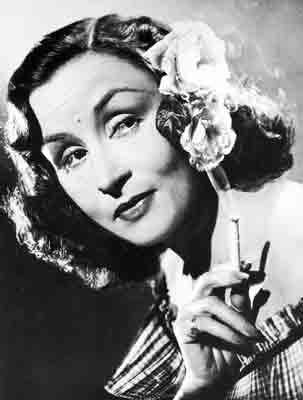
In December 1934 Tita Merello told the radio journalist Héctor Bates how a girl from San Telmo who learned to read at twenty became a tango star, and that she would one day be Argentina's great actress.
At a glance
- Born Laura Ana Merello on 11 October 1904 in Buenos Aires, registered at Defensa 715 in San Telmo; died on 24 December 2002
- Stage debut in 1917, chorus girl in 1919, then revue dancer, tango singer and actress
- Films from the first Argentine talkie (¡Tango!, 1933) on, among them La fuga (1937) and Los isleros (1951)
Fuente original: «Las entrevistas con Bates: Tita Merello» (Antena, 1934) · Resumen en español ↓
Tita Merello (1904–2002) is remembered as one of the great actresses of Argentine cinema and, among the tango artists of her time, as the voice of the milonga Se dice de mí. Long before that, in December 1934, she was a tango singer with a reputation for being difficult. Interviewed on the radio by Héctor Bates, she described her hard beginnings with humour and announced, without false modesty, that she would become “the great actress of Buenos Aires”. The interview was printed in the magazine Antena and reprinted sixty years later in Revista Club de Tango. It is the source of several facts that are still quoted about her early life.
The interview
Héctor Bates presented a radio programme about tango and its performers. In 1936, together with Luis J. Bates, he published La historia del tango, one of the first books on the subject. The magazine that printed his conversation with Tita Merello introduced her carefully. The editors did not dare call her a cancionista, a tango singer, because she was convinced she would soon be recognised as a dramatic actress and would have taken offence.
What follows comes from her own answers. The quotations are our English translation of the Spanish text.
Childhood without school
Tita said she was born in San Telmo and “should have been born a man”. Between the ages of ten and twelve she worked as a boyero, an ox herd, on a country estate, and only afterwards came to Buenos Aires with her family. She never went to school. She taught herself to read and write at the age of twenty, alone, with a dictionary.
In Buenos Aires she kept house for the family and claimed she did it better then than in 1934: she haggled over five cents at the market and sang while washing the dishes. When she first sang a tango at home, her mother scolded her for the kind of music she had chosen. “And to think that today we both bless the tango,” Tita added.
From the Avenida to the Porteño
Her first appearance on stage was at the Teatro Avenida in 1917. In 1919 she was a chorus girl in an operetta company at the Teatro Porteño, earning 165 pesos a month. In her first month she was fined 20 pesos for going on stage without stockings. “And to think that nowadays they pay us to go without them!” she told Bates.
She later danced as a bataclana, a revue girl, with the company of Madame Rasimi at the Teatro Ópera. The make-up was so heavy, she said, that nobody could recognise the dancers. After the opening night an admirer followed her for several blocks, speaking French. When she finally told him in porteño slang to clear off or she would have him arrested, the “Frenchman” understood perfectly and vanished: he was as local as she was. With a revue company in Rosario she even took the post of first dancer, although, by her own account, she had never danced before.
The tangos that made her name
Asked which tangos she had made popular, she named Del barrio de las latas, Leguisamo (presumably Leguisamo solo), El ciruja and Niño bien. She considered Del barrio de las latas the song that revealed her to the public.
She chose the comic tango, she explained, because it was the hardest: “Comedy and the ridiculous lie very close together; there is nothing harder than making people laugh.”
Art before money
At the Teatro Apolo she earned 800 pesos a month. She left for the Teatro Nacional at half the fee because she saw a chance “to make art and not only sing tangos”. When Bates asked what billing she had there, she answered that you cannot assign a rank to someone who is somebody.
She knew she was called insolent in the theatre and defended herself. No management paid her, she said; the audience paid her, and if the audience stayed away, the theatre closed. Nobody had protected her. Counted, as she put it, “among the ugly ones”, she had to rely on her own merits. She had tried serious theatre in La mala ley with the actor Luis Arata, and she remembered a single line of praise in the press: Arata could not have found a worthier partner. For a tanguera, she said, that was a promise for the future.
A prediction that came true
The interview ends with her ambition. She did not know when, she said, perhaps at 45, but she was convinced she would become the great actress of Buenos Aires, and this was “neither insolence nor pretension”.
The following decades proved her right. She had already appeared in ¡Tango! (1933), regarded as the first Argentine talkie. In La fuga (1937, directed by Luis Saslavsky) she showed what she could do as a dramatic actress, and her Carancha in Los isleros (1951, directed by Lucas Demare) is remembered as one of her great roles.
The song most tied to her name came late. Se dice de mí, a milonga by Francisco Canaro and Ivo Pelay from 1943, was first recorded by a man, the singer Carlos Roldán with Canaro’s orchestra. Tita recorded it with Canaro in 1954, and after the film Mercado de abasto (1955) it became hers for good.
Sources
- Héctor Bates, “Las entrevistas con Bates: Tita Merello”, Antena, 22 December 1934; reprinted in Revista Club de Tango no. 13, March–April 1995. Archived copy on clubdetango.com.ar (archive.org, 2009).
- Néstor Pinsón, “Tita Merello”, Todotango (birth and death dates, registration at Defensa 715, ¡Tango!, La fuga, Los isleros, the 1954 recordings with Canaro).
- “Se dice de mí”, milonga (1943), Todotango; “Se dice de mí”, la milonga que se anticipó al feminismo y que inmortalizó a Tita Merello, La Nación, 3 October 2022 (Carlos Roldán’s first recording, Tita’s 1954 version, Mercado de abasto).
- Film data: La fuga (1937) and Los isleros (1951), IMDb.
- Héctor Bates and Luis J. Bates, La historia del tango. Sus autores, Buenos Aires 1936 (library record).