Anita Palmero: The Andalusian Who Became a Tango Star
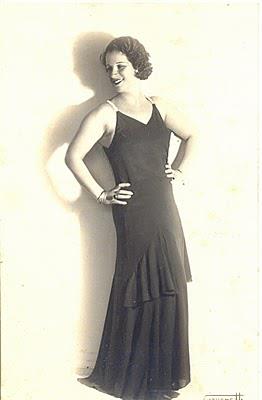
Born in Ronda in 1902, Anita Palmero sang cuplés in North Africa, arrived in Buenos Aires as a Spanish tonadillera and, guided by José Razzano, became one of the tango singers of the 1920s and 1930s.
At a glance
- Born in Ronda (Málaga), Spain, in September 1902: 13 September according to the Club de Tango calendar, 16 September according to Todotango
- Died in Buenos Aires on 11 January 1987; buried in the Chacarita cemetery
- Turned to tango through José Razzano; on radio from 1930; known for Botarate and her own milonga Burrero seco
Fuente original: «Efemérides tangueras (enero)» (Efemérides tangueras, Club de Tango) · Resumen en español ↓
Anita Palmero was one of the Spanish women who made a career in Argentine tango. She came to Buenos Aires as a singer of Spanish songs, was steered towards tango by José Razzano, then Carlos Gardel’s manager, and became a well-known voice on the radio and the stage of the 1920s and 1930s. The old Club de Tango anniversary calendar, Efemérides tangueras, records her death in one line. This page fills in her life from the Todotango biography by Guadalupe Aballe and from two Spanish newspaper reports published in 2010, when a documentary brought her back to attention in her home province.
Dates and birthplace
Under 11 January the calendar notes that the cancionista (female tango singer) Anita Palmero died in Buenos Aires in 1987, and that she had been born in Spain on 13 September 1902. Guadalupe Aballe’s biography on Todotango gives her real name as Ana Palmero, her birthplace as Ronda, in the province of Málaga, and her date of birth as 16 September 1902; it agrees on the date of death, 11 January 1987. Both Spanish papers place her birth in Ronda in 1902. We give both birth dates, since neither source cites a document.
From cuplé to tango
Palmero started very young as a cupletista, a singer of cuplés, the short, often saucy songs of the Spanish variety stage. Aballe places these beginnings in Gibraltar and Casablanca. Sergio Mellado, writing in El País in 2010, explains why North Africa: at fifteen she left poverty in Spain with her family for French-ruled Morocco, and began performing in Tangier and Casablanca.
In 1925, according to both Aballe and Mellado, she joined a variety company, appeared at the Teatro Romea in Madrid and then toured Mexico and Cuba as a tonadillera, a singer of Spanish popular songs, before reaching Buenos Aires. There she met José Razzano. Aballe writes that she had a long relationship with him and that, on his advice, she devoted herself to tango. Mellado describes Razzano as the man who introduced her into the tango world.
Aballe is frank about her voice: she did not have a great one, but her singing had a charm that won over many listeners, and she had the grace of Andalusian women.
Radio, records and the stage
Aballe dates her radio debut to 1930, on Radio Argentina. Among her recordings Aballe names the tango Botarate, the waltzes Encantadora and Ilusión marina and the pasodoble El niño de las monjas. On many of her records she was accompanied by José Ricardo, who had been Gardel’s guitarist.
In 1931 she took part in La fiesta del tango at the Teatro Colón, the evening at which Libertad Lamarque was crowned “queen of tango”. In 1933 she sang on Radio Splendid, and at the end of that year and in 1934 she worked at Radio Prieto with Edgardo Donato, among others. She also opened the station LU7 Radio General San Martín in Bahía Blanca.
The two Spanish newspapers both credit her with a historic first. La Opinión de Málaga calls her the best-paid star of musical radio and the first to sing a tango in Argentine sound cinema; El País says she made history with the first tango of Argentine sound film. Neither article names the film.
She also wrote. Aballe credits her with the milonga Burrero seco, inspired by her former husband’s failed investments in racehorses (burrero is Buenos Aires slang for a racing fan). Mellado names Botarate and Burrero seco as the titles that keep her name alive among tango classics.
A turbulent private life
Her private life, all sources agree, was eventful. Aballe writes that in 1939, when she returned to the air on Radio El Mundo, her second husband, the actor and announcer Lalo Harbin, shot her; she survived. Mellado confirms that Harbin shot her in the street. She then spent almost five years in Brazil.
Back in Argentina, she joined the company of the Teatro Cervantes in 1948 and played Doña Agustina Rosas de Mansilla in David Peña’s historical drama La divisa punzó. On screen she appeared in Fúlmine (1949) with Pepe Arias and in El ladrón canta boleros (1950) with Mario Clavell, according to Aballe, who dates her final retirement to 1963.
Mellado adds that her support for Peronism cost her work after the 1955 coup against Juan Domingo Perón. La Opinión de Málaga reports that she died in a home for the elderly and lies in the artists’ pantheon of the Chacarita cemetery in Buenos Aires, in a grave that does not bear her name.
Remembered in Málaga
In 2009 the Málaga filmmaker Gaby Beneroso and Enrique de la Vega made the documentary Anita Palmero, una suerte de tangos (Barvoleta Films). It was shot in Ronda, Casablanca, Tangier or Tunis, and Buenos Aires (the two papers differ on the North African location) and presented in Málaga in April 2010. Beneroso told El País that hardly anyone in Ronda knew her name and that she was barely remembered in Argentina.
For tango dancers she is a reminder that the first generation of women tango artists included performers who came from very different traditions, in her case the Spanish cuplé, and adapted them to the music of Buenos Aires.
Sources
- “Efemérides tangueras (enero)”, Club de Tango (clubdetango.com.ar). Archived copy (archive.org, 2013) (death on 11 January 1987 in Buenos Aires; birth in Spain on 13 September 1902).
- Guadalupe Aballe, “Anita Palmero”, Todotango (real name, Ronda, 16 September 1902, cuplé beginnings, 1925 company and tour, Razzano, radio from 1930, recordings with José Ricardo, Teatro Colón 1931, radio stations 1933–1934, the 1939 shooting, Brazil, La divisa punzó 1948, films of 1949 and 1950, Burrero seco, retirement in 1963).
- Sergio Mellado, “La reina de las milongas porteñas”, El País, 10 June 2010 (Ronda 1902, emigration to Morocco at fifteen, 1925 tour, Razzano, first tango of Argentine sound film, the shooting, Peronism and 1955, death in 1987, Chacarita, the documentary).
- A. Guillén, “Beneroso y De la Vega sacan del olvido a Anita Palmero”, La Opinión de Málaga, 16 April 2010 (best-paid radio star, first tango in Argentine sound cinema, death in a home for the elderly, unmarked grave in the Chacarita artists’ pantheon, the documentary and its locations).