Teatro Colón: The First Voices of Buenos Aires's Opera House on Record
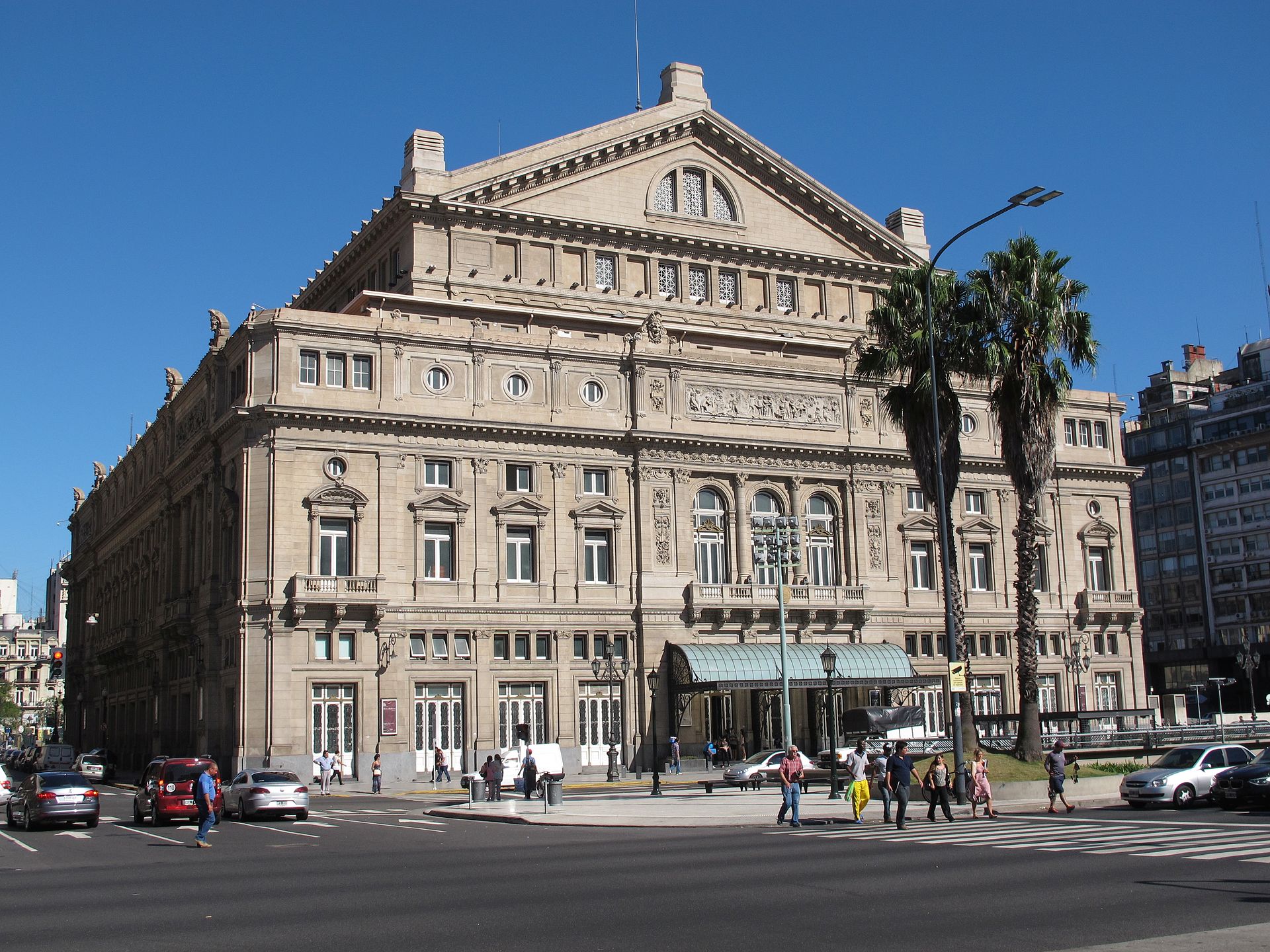
A tango collector's CD brings together the voices that filled the Teatro Colón in its first years, from Titta Ruffo and Enrico Caruso to Lucrezia Bori singing a tango.
At a glance
- The present building opened on 25 May 1908 with Verdi's Aida
- The CD gathers 24 recordings (1904–1934) by 22 singers who made their Colón debuts between 1908 and 1919
- Tango meets opera: the soprano Lucrezia Bori recorded Patotero sentimental for Victor in 1925
Fuente original: «Los primeros cantantes del Teatro Colón de Buenos Aires - Vol. 1» (Los primeros cantantes del Teatro Colón, vol. 1 (presentación del disco)) · Resumen en español ↓
The Teatro Colón is Buenos Aires’s great opera house, and for many visiting tango dancers it is on the list of places to see between milongas. The old Club de Tango website, run by people who collected tango records, once presented a CD that looks at the Colón from a tango lover’s angle: Los primeros cantantes del Teatro Colón de Buenos Aires, volume 1, “The first singers of the Teatro Colón”. Its compiler admitted that he was no expert in opera but, as a tanguero, a great admirer of an art “in which the performers deliver the spoken word by singing” (our translation). This page describes the disc and adds what independent sources say about the theatre’s first years.
An opera house opened on a national holiday
The compiler recalls that the present Colón opened on the evening of 25 May 1908, Argentina’s national day, with Verdi’s Aida. The city of Buenos Aires gives the same date and opera on its official tourism site and names the architects: Francesco Tamburini, Vittorio Meano and Jules Dormal.
The opening night was less glorious than the building. In a 1997 article for La Nación, Paula Urien explained that the theatre had planned to open with Otello or Hamlet, but the singers Antonio Paoli and Titta Ruffo turned the leading roles down, out of the old superstition that opening a theatre brings bad luck. Aida was put on at the last minute with what she calls a second-rate cast. Ruffo did sing at the Colón that same year: the CD lists 1908 as his debut.
Twenty-four voices from discs and cylinders
The CD holds 24 tracks, recorded between 1904 and 1934, by 22 singers. For each one the booklet gives the year of the first appearance at the Colón, from 1908 (the tenor Amadeo Bassi and the baritone Titta Ruffo) to 1919 (the soprano Maria Labia). According to the presentation, the recordings were transferred using the original machines, discs and cylinders, and the booklet includes photographs of all the singers.
Most of the programme is classic opera: Giuseppe Anselmi in Donizetti’s Don Pasquale (1907), María Barrientos in two arias from Bellini’s La sonnambula (1906), Tito Schipa in Gounod’s Faust (1913), the mezzo-soprano Fanny Anitúa in “Stride la vampa” from Il trovatore (1910), Eugenia Burzio in Un ballo in maschera (1906) and Rosina Storchio, again in La sonnambula (1906). Two tracks are Edison cylinders from 1912, by Maria Labia and Adelina Agostinelli. Some singers remain obscure: for the mezzo-soprano Elena Lucci and the tenor Alexander Rosanoff, both Colón debutants of 1909, the booklet could give no dates of birth or death.
Caruso in Buenos Aires
The most famous name on the disc is Enrico Caruso, who according to the booklet first sang at the Colón in 1915. He is represented by the song “Scordame” by Salvatore Fucito, in a 1919 Victrola recording. A 2026 article by Marcos Calligaris for Cadena 3 describes what followed his Colón season that year: a series of four performances at the Teatro Rivera Indarte in Córdoba, opening with Manon Lescaut on 10 July 1915; Caruso sang in two of them.
Argentine music in Italian voices
What makes the CD interesting for tango listeners are the tracks where the Colón’s international stars sing Argentine music:
- The national anthem. The bass Marcel Journet, Colón debut 1916, recorded the Himno Nacional Argentino for Victrola in 1916.
- The flag song. The tenor Florencio Constantino, Colón debut 1909, sings the “Canción a la bandera” from Héctor Panizza’s opera Aurora (Columbia, 1910). As Cecilia Scalisi wrote in La Nación in 2024, Aurora had its premiere at the Colón in 1908, during the inaugural season, with the composer conducting, and its aria “Alta en el cielo” became a patriotic song taught in every Argentine school.
- An art song. Hina Spani, Colón debut 1915, sings La canción del carretero by Carlos López Buchardo (HMV, 1930).
- A canción tango. The tenor Hipólito Lázaro, Colón debut 1915, recorded Dónde estás corazón by Luis M. Serrano for Columbia in 1929.
- A real tango. The soprano Lucrezia Bori (Lucrecia in the booklet), who first sang at the Colón in 1911, recorded Patotero sentimental, by Manuel Jovés with words by Manuel Romero. The Discography of American Historical Recordings dates the session to 8 December 1925 in Camden, New Jersey, issued as Victor 1190, and the Victor ledgers describe the piece as a tango milonga.
The disc ends with a curiosity: Tito Schipa singing the anonymous L’inno degli sfessati, a private Victor recording made in Buenos Aires in 1934.
Tango and the Colón
The compiler’s point is simple: for a porteño, the Colón and the tango belong to the same city. Musicians also moved between both worlds. The violinist Manuel Posadas, brother of the tango composer Carlos Posadas, was first violin at the Colón, according to Ricardo Ostuni’s essay in Revista Club de Tango. The Colón is one of the tango places of Buenos Aires that this site covers, and this CD is a reminder that some of its first opera stars also recorded tangos and Argentine songs.
Sources
- Los primeros cantantes del Teatro Colón de Buenos Aires, vol. 1, presentation and track list of the CD. Archived copy on clubdetango.com.ar (archive.org, 2011).
- Gobierno de la Ciudad de Buenos Aires, “Teatro Colón”, official tourism site (opening on 25 May 1908 with Aida, the architects).
- Paula Urien, “El Colón que no se ve”, La Nación, 16 March 1997 (the planned Otello or Hamlet, Paoli and Ruffo refusing, the last-minute Aida).
- Cecilia Scalisi, “La ópera nacional Aurora es mucho más que Alta en el cielo”, La Nación, 23 September 2024 (premiere of Aurora at the Colón in 1908, “Alta en el cielo” as the flag song).
- Marcos Calligaris, “Enrico Caruso en Córdoba: la visita del tenor más famoso del mundo”, Cadena 3, 9 July 2026 (the Córdoba performances after the 1915 Colón season, Manon Lescaut on 10 July 1915, Caruso in two of four).
- “Victor matrix BVE-33978. Patotero sentimental / Lucrezia Bori”, Discography of American Historical Recordings, UC Santa Barbara (date, place, issue number, composer and lyricist, “tango milonga”).
- Ricardo A. Ostuni, “Tangueros de sangre negra: Carlos Posadas”, Revista Club de Tango no. 12, December 1994. Archived copy on clubdetango.com.ar (Manuel Posadas as first violin of the Colón).