Francisco Gorrindo: The Quilmes Poet Behind Las cuarenta and Paciencia
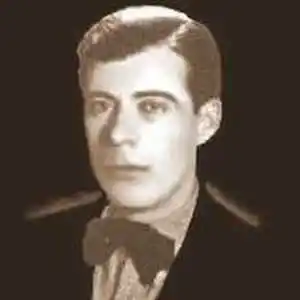
Francisco Gorrindo never left his native Quilmes, yet in the late 1930s his hard, unsentimental lyrics, from Las cuarenta to Paciencia, were sung all over Buenos Aires.
At a glance
- Born Froilán Francisco Gorrindo on 5 October 1908 in Quilmes, province of Buenos Aires; died on 2 January 1963
- Wrote almost seventy tangos; his breakthrough came in 1937 with Las cuarenta (music by Roberto Grela) and Paciencia (music by Juan D'Arienzo)
- Close to Juan D'Arienzo's orchestra, which recorded Paciencia, La bruja, Dos guitas and Magdala
Fuente original: «El tango, tema popular de los argentinos en la tarea de Froilán F. Gorrindo. Su vida y su obra» (Jorge Fernández «Jorfer», Revista Club de Tango, 1997) · Resumen en español ↓
Dancers who have never heard the name Francisco Gorrindo know his words, even if he is rarely counted among the famous tango artists. Paciencia, recorded by Juan D’Arienzo in 1937, is still a staple of milonga playlists, and Las cuarenta became one of the classic tangos of disenchantment. Gorrindo wrote them, and almost seventy other tangos, without ever leaving Quilmes, the town south of Buenos Aires where he was born. In 1997 the writer Jorge Fernández, who signed as “Jorfer”, traced his life and work in Revista Club de Tango. His article is the main source of this page; facts from other sources are attributed in the text.
A childhood in Quilmes
According to Jorfer, Froilán Francisco Gorrindo was born on 5 October 1908 into a modest home in Quilmes. He lost his father when he was very small and was brought up by his mother and his aunts. He left primary school early and had no other education; the street, Jorfer writes, gave him his lessons. Even so he was drawn to poetry and began to write. The Todotango biography by Gaspar Astarita confirms the dates and adds that he worked as a municipal employee and travelled every day into central Buenos Aires, where he mixed with the city’s musicians.
His friends called him “Pancho”. Jorfer describes him as rebellious and restless, a night owl who looked for happiness in the bohemian life of the small hours. On 21 June 1937 he married Elma Lepanti (Astarita spells her name Emma). They had three children, Sonia Norma, Marta Edith and Juan Carlos, and lived in a house on Calle Belgrano in Quilmes, which he had bought with great effort. Jorfer counts the years until 1940 as his best period as a poet.
A harsh voice, close to Discépolo
The nights took their toll. Jorfer reports a nervous crisis from which his family and his doctors pulled him through, and all the while Gorrindo kept writing. His tone was rough, rigorous and crude, at times merciless, and Jorfer compares it to the bitter philosophy of Enrique Santos Discépolo. He opens the article by pairing the two: neither of them, he notes, lived long enough to retire. Astarita reaches a similar verdict in his own words: Gorrindo’s message had rigour and harshness, but also depth and scepticism.
A childhood friend, Jorge Rodríguez Lizza, told Jorfer that Gorrindo had portrayed himself in the tango Mala suerte, with its image of a caged bird that never stops longing to fly.
The breakthrough of the late 1930s
Gorrindo’s name became known around the end of the 1930s, when a series of what Jorfer calls philosophical tangos reached the public through the great singers of the day. Astarita dates the start of this, his most successful period, to 1936. Before that, according to Astarita, Gorrindo had written his first tango, Perdón de muerta, with the guitarist Pablo Rodríguez; Rodríguez’s wife, the singer Mercedes Simone, recorded it on 11 February 1931.
Las cuarenta. The guitarist Roberto Grela set Gorrindo’s lyrics to music. According to Jorfer, the chansonnier Fernando Díaz introduced the tango at a show in General Pico, in the province of La Pampa. Néstor Pinsón and Ricardo García Blaya tell the same story in their Todotango biography of Grela: during a tour of La Pampa in 1937, Grela took out some lyrics Gorrindo had given him and had just set to music, and Díaz premiered them with great success. Díaz never recorded it. Jorfer lists those who took it up afterwards: Azucena Maizani on Radio Belgrano, Charlo, Jorge Omar, Roberto Maida with Francisco Canaro’s orchestra, Alberto Serna and, as he puts it, almost every singer since.
Paciencia. Gorrindo gave these lyrics to Juan D’Arienzo, who wrote the music. D’Arienzo’s orchestra recorded it with the singer Enrique Carbel; Todotango’s recording list gives 29 October 1937 for RCA Victor. Jorfer adds later versions by D’Arienzo with Alberto Echagüe and with Horacio Palma, a 1970 remake with Echagüe, and a recording by Agustín Magaldi on 6 January 1938, shortly before Magaldi’s death.
More tangos and their first recordings
Jorfer runs through the rest of the catalogue with its first performers:
- Gólgota, music by the pianist Rodolfo Biagi, recorded with the singer Teófilo Ibáñez; in 1938 also by Jorge Omar with Francisco Lomuto’s orchestra.
- Novia, music by Francisco Rofrano, recorded by Charlo in 1937.
- Déjame ser así, with the bandoneonist Enrique Rodríguez, recorded by his orchestra with Roberto “Chato” Flores.
- La bruja, music by Juan Polito, recorded twice by D’Arienzo, with Alberto Echagüe and with Mario Bustos.
- Ansiedad, music by Domingo Moro, a bandoneonist of D’Arienzo’s early orchestra.
- Mala suerte, music by Francisco Lomuto, sung by Jorge Omar and recorded in 1939.
- Dos guitas, with D’Arienzo, recorded in 1954 with Alberto Echagüe.
- La vida es corta, with Ricardo Tanturi, recorded with Alberto Castillo.
- Magdala, again with Biagi. D’Arienzo got there first, with Alberto Laborde on 26 December 1944; Biagi’s own version with Jorge Ortiz followed on 24 January 1945.
Astarita confirms these partnerships and notes that D’Arienzo’s orchestra did more than any other to make Gorrindo’s tangos popular. For dancers, the D’Arienzo recordings of Paciencia and La bruja are the easiest way in.
One of his last tangos, Mi cielo, with music by the bandoneonist Héctor D’Espósito, shows a different side: here, Jorfer writes, the man who had denounced injustice becomes a romantic.
Illness and death
Around 1959 an illness that Jorfer calls a terrible virus took hold of Gorrindo. He fought it for four years and died on 2 January 1963, aged 54. Astarita speaks of a painful illness and gives the same date. Quilmes, which he never left, later named a street after him.
Sources
- Jorge Fernández “Jorfer”, “El tango, tema popular de los argentinos en la tarea de Froilán F. Gorrindo. Su vida y su obra”, Revista Club de Tango no. 26, September–October 1997. Archived copy on clubdetango.com.ar (archive.org, 2010).
- Gaspar Astarita, “Francisco Gorrindo”, Todotango (Spanish version) (birth and death dates, municipal job, Emma Lepanti, Perdón de muerta and Mercedes Simone’s 1931 recording, start of his best period in 1936, the D’Arienzo connection, the verdict on rigour and scepticism).
- Néstor Pinsón and Ricardo García Blaya, “Roberto Grela”, Todotango (premiere of Las cuarenta by Fernando Díaz on a 1937 tour of La Pampa).
- “Paciencia”, tango (1937), Todotango (D’Arienzo–Carbel recording of 29 October 1937).