Carlos Gardel: His Films, His Last Letter and Two Debates
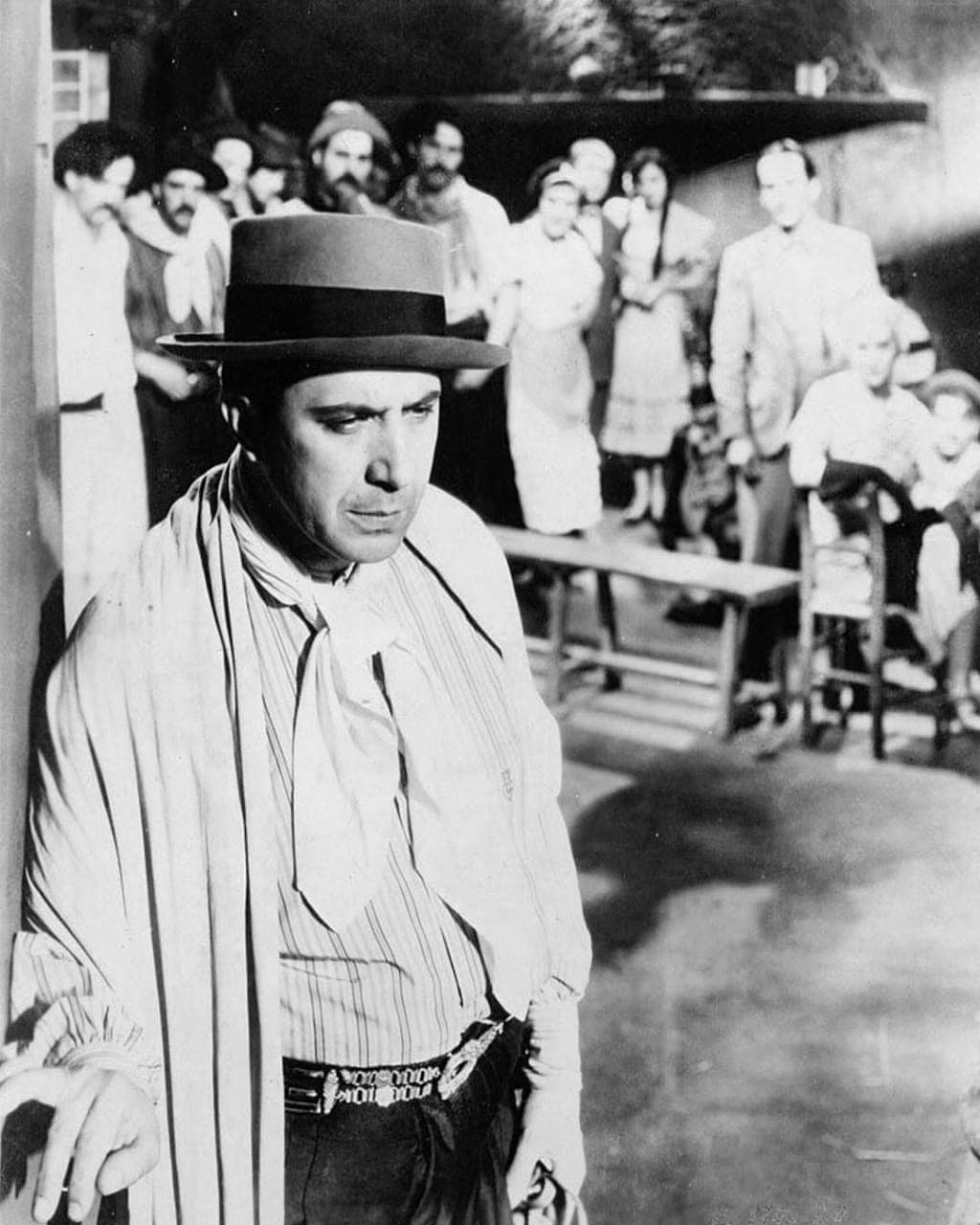
A checked list of Carlos Gardel's films, a note he wrote in Bogotá three days before his death, and two contributions to the long argument over where he went to school and where he was born.
At a glance
- Gardel's Paramount features: four made at Joinville near Paris (1931–1932) and five in New York (1934–1935), after a silent debut in Flor de durazno (1917)
- On 21 June 1935 in Bogotá, three days before he died in the Medellín air crash, Gardel wrote a note praising a teacher whose pupils had sung his songs
- Martina Iñiguez placed Gardel's childhood school photo in Montevideo; Ricardo Ostuni's book Repatriación de Gardel (1995) disputed the 1890 Toulouse birth
Fuente original: «Filmografía [de Carlos Gardel]» (Club de Tango, filmografía) · Resumen en español ↓
Fuente original: «La última carta de Gardel» (Revista Club de Tango n.º 16, 1995) · Resumen en español ↓
Fuente original: «Carlos Gardel y la escuelita de la calle Durazno casi Médanos» (Martina Iñiguez, Club de Tango) · Resumen en español ↓
Fuente original: «Repatriación de Gardel. Novedoso estudio de Ricardo Ostuni» (Latin Beat Magazine, 1997) · Resumen en español ↓
Carlos Gardel died on 24 June 1935, and nearly a century later new papers, photos and theories about him still turn up. The old Club de Tango site gathered several of them in its Gardel section. This page brings together four short pieces from that section: a list of his films, a note he wrote in Bogotá three days before his death, an essay on a school photograph, and a review of a book that questioned his official birth. We summarise each in our own words, check the facts against independent film records, newspapers and libraries, and set out both sides where the authors take one. More portraits of singers and musicians are in our section on tango artists.
The films
The Club de Tango filmography lists eleven entries from 1917 to 1935. Checked against the AFI Catalog of the American Film Institute, the filmography of the Museo Casa Carlos Gardel in Buenos Aires and Pablo Taboada’s biography on Todotango, it holds up well, with one difference in counting and some dates that refer to shooting rather than release.
The silent debut. Gardel’s first film was Flor de durazno (1917), a silent picture, as both the museum and Taboada confirm. The Club de Tango list names Francisco Defilippis Novoa as director and a novel by Hugo Wast as the source.
The shorts of 1930. The list counts ten short sound films directed by Eduardo Morera, each built around one song, among them Mano a mano, Viejo smoking, Yira yira and El carretero. The museum speaks of fifteen shorts, made with the guitarists Aguilar, Barbieri and Riverol and with Francisco Canaro’s orchestra. Taboada dates them to 1930.
Paramount in France. In 1931 Gardel signed with Paramount, according to the museum, which counts four films shot at the company’s Joinville studios near Paris and five in New York. The Club de Tango list matches that split:
- Las luces de Buenos Aires (1931), directed by Adelqui Millar, with Sofía Bozán, Gloria Guzmán and Pedro Quartucci. The AFI Catalog records shooting at Joinville in May and June 1931 and a Buenos Aires opening on 23 September 1931; the songs include Tomo y obligo and El rosal.
- Espérame, directed by Louis Gasnier with Goyita Herrero and Lolita Benavente. The museum dates the shooting to September 1932 and the Buenos Aires premiere to 5 October 1933.
- La casa es seria, a medium-length film with Imperio Argentina, made in France in 1932 according to the list and Taboada.
- Melodía de arrabal, directed by Gasnier with Imperio Argentina and Vicente Padula. AFI dates the shooting to November 1932 and the Buenos Aires opening to 5 April 1933; the title song and Silencio are among its numbers.
The list gives 1932 for the last three; the release dates above show that they reached cinemas in 1933.
New York. The other five were made in New York. For Cuesta abajo (1934), directed by Gasnier with Mona Maris and Vicente Padula, AFI records shooting in May 1934 at the Eastern Service Studios in Astoria, a New York opening on 10 August 1934, Gardel’s own company Exito as producer and Paramount as distributor; the songs include the title tango and Mi Buenos Aires querido. El tango en Broadway (1934), again directed by Gasnier, with Trini Ramos and Vicente Padula, was shot at the same studios in July 1934 and opened in New York on 28 December 1934, according to AFI. Cazadores de estrellas was Paramount’s revue The Big Broadcast of 1936, directed by Norman Taurog, in which Gardel appears among the radio stars of the day. Taboada dates his part to late 1934, and the museum gives the Buenos Aires premiere as 30 April 1936. The list says he sang Amargura and Apure delantero buey.
The last two were directed by John Reinhardt. El día que me quieras, with Rosita Moreno and Tito Lusiardo, was shot in January 1935 and opened in Havana on 5 July 1935, eleven days after Gardel’s death (AFI); its songs include the title song, Guitarra mía, Sus ojos se cerraron and Volver. The Club de Tango list also names the young Astor Piazzolla in the cast, which the AFI cast list does not show. Tango Bar, with Rosita Moreno, Enrique de Rosas and Tito Lusiardo, was shot on Long Island in February 1935 and opened at the Cine Broadway in Buenos Aires on 16 July 1935, according to the museum. Among its songs, the list names Por una cabeza.
A note from Bogotá, 21 June 1935
In 1995 Revista Club de Tango printed what it called Gardel’s last letter. The Colombian researcher Luciano Londoño López had sent it to the magazine’s contributor Ricardo Ostuni. According to the magazine, the document had been found by the architect Gastón Patiño and first published by El Tiempo of Bogotá on 24 June, the anniversary of Gardel’s death. The magazine describes it as a letter congratulating the pianist Elisa Urruchurto; the text itself speaks of a teacher and of an album belonging to a Mrs Giraldo. We could not trace the original or the El Tiempo article, so we cannot say how the two names relate.
The note is short. Gardel recalls children who sang his songs at the Teatro Municipal with a purity and simplicity he will not forget, and praises the patient work of their teacher, a devotion he rarely finds among professional artists. In his words, “with the children and their teacher alone, my trip to Bogotá is well rewarded” (our translation). He closes by wishing the album’s owner perseverance and happiness, and signs with the date 21 June 1935.
The date fits what is known of his last days. Gardel was in Bogotá in June 1935. According to Jhon Edward Montenegro Jiménez in El País of Cali, he sang for the last time on the night of 23 June at the radio station La Voz de la Víctor and took leave of his Colombian audience. The next day, 24 June 1935, his plane stopped in Medellín on the way to Cali and collided with another aircraft on take-off (Taboada; El País; La Gaceta of Tucumán, which counts 17 dead). The tour that led him there is told in our article on Gardel in Venezuela, 1935.
Why we may quote the note: Gardel died on 24 June 1935. Argentine copyright law (Law 11.723) protects a work for seventy years after the author’s death, counted from the following 1 January, so his writings have been in the public domain since 1 January 2006.
Where did Gardel go to school?
The third piece is an essay by Martina Iñiguez, written around 2004 (it mentions a demolition in September 2003 as “last year”). She writes from what she calls the Uruguayan position: that two children were linked to Berta Gardes. One was Charles Romuald Gardes, born in Toulouse in 1890 and documented. The other, undocumented, was Carlos Gardel, supposedly born in Tacuarembó, Uruguay, three to six years earlier. Her reasons are the ages that witnesses and Gardel himself gave, the fact that the singer did not speak French and made spelling mistakes while the documented boy finished school with top marks, and many testimonies of Berta and Carlos staying in Tacuarembó.
The documented schooling of Charles, known in Buenos Aires as Carlos Gardes, is not in doubt. Guadalupe Aballe, in her Todotango chronicle on the boy at school, lists a certificate of 1897 from the girls’ school at Talcahuano 678, then open to boys under ten, kept at the Museo Carlos Gardel; a certificate of 1899 for second grade from Elementary School no. 2 at Libertad 455; a break in 1900, when that school was reduced to the first two grades; and graduation from the Colegio San Estanislao in 1904 with the best marks. Iñiguez adds the 1897 exam sheet she found herself, on which Carlos Gardes, aged seven, scored nine for application and one for conduct.
Her argument turns on a photo. In June 1936 the magazine La Canción Moderna printed a school group of 56 boys in which Berta Gardes had circled her son. In 1960 the journalist Carlos Marín wrote in Ahora that its back was dated 1893. The picture shows a cramped corner under a skylight and no girls, which, Iñiguez argues, rules out the large mixed school of 1897. She cites the Uruguayan researcher Avlis, according to whom Gardel once told a fellow traveller that he had attended School no. 27 at Durazno 1347, near Médanos street, in Montevideo. In Montevideo she visited the school that later stood opposite that site, interviewed its staff and the foreman who demolished the old building, and concluded that the photo was probably taken there. The news agency EFE reported her conclusion in 2008 (via El Mostrador), noting that others who had studied Gardel’s schooling believed the photo came from the Nicolás Avellaneda school in Buenos Aires, which according to the authors Iñiguez quotes is the successor of the girls’ school of 1897.
Ostuni’s book and the birth debate
The fourth piece is a review by Luciano Londoño López of Repatriación de Gardel by Ricardo Ostuni, printed in Latin Beat Magazine in May 1997 and reprinted by Revista Club de Tango. The library of the Universidad Nacional de Lomas de Zamora records the book as published in Buenos Aires by Club del Tango in 1995, with Horacio Ferrer and Hipólito Paz as contributors.
The reviewer praises the book without reserve. As he presents it, Ostuni, then vice-president of the Academia Nacional del Tango, argues that Gardel cannot have been the French boy born in 1890 and treats him as a criollo, referring constantly to Tacuarembó without stating that he was Uruguayan. The review goes further: it claims that the French identity served to validate a will under which Gardel’s estate passed to Berta Gardes and then to his agent Armando Defino, instead of going to the Argentine state, since Gardel had become an Argentine citizen in 1923. These are the reviewer’s and the book’s claims; the review gives no voice to the other side.
The opposing view rests on the birth record from Toulouse. Taboada’s Todotango biography gives Gardel’s birth as 11 December 1890 in Toulouse, as Charles Romuald Gardes, and says Berta brought him to Argentina in 1893. In January 2026 the journalist José Claudio Escribano, writing in La Nación, discussed a recently found 1920 declaration at the Uruguayan consulate in Buenos Aires in which Gardel gave his birth as 11 December 1887 in Tacuarembó. Uruguayan researchers read it as confirmation; Escribano reads it as a false statement made to obtain identity papers, and holds that the Toulouse record remains the proof of his birth. The question is still argued on both sides of the River Plate, and this page does not try to settle it.
Sources
- “Filmografía”, Gardel section of the Club de Tango site. Archived copy on clubdetango.com.ar (archive.org, 2012). Film titles, directors, casts and songs as listed.
- “La última carta de Gardel”, Revista Club de Tango no. 16, October–December 1995. Archived copy on clubdetango.com.ar (archive.org, 2011). Text and provenance of the note of 21 June 1935.
- Martina Iñiguez, “Carlos Gardel y la escuelita de la calle Durazno casi Médanos”, Club de Tango site. Archived copy on clubdetango.com.ar (archive.org, 2012). The two-children thesis, the school photo, the 1897 exam sheet, School no. 27 in Montevideo.
- Luciano Londoño López, review of Ricardo Ostuni, Repatriación de Gardel, Latin Beat Magazine, May 1997; reprinted in Revista Club de Tango no. 26, September–October 1997. Archived copy on clubdetango.com.ar (archive.org, 2007).
- American Film Institute, AFI Catalog: Las luces de Buenos Aires, Melodía de arrabal, Cuesta abajo, El tango en Broadway, El día que me quieras (directors, studios, shooting and opening dates, casts, songs).
- Museo Casa Carlos Gardel, Buenos Aires, Filmografía and the pages on Espérame, Tango Bar and Cazadores de estrellas (silent debut 1917, fifteen shorts of 1930, Paramount contract 1931, four films at Joinville and five in New York, dates and casts).
- Pablo Taboada, “Carlos Gardel”, Todotango (birth in Toulouse on 11 December 1890, arrival in 1893, film chronology, death on 24 June 1935 in Medellín).
- Guadalupe Aballe, “The boy Gardes at school”, Todotango (certificates of 1897 and 1899, the school change of 1900, San Estanislao 1904).
- Jhon Edward Montenegro Jiménez, “Recorrido por la vida y muerte de Carlos Gardel a 86 años de su partida”, El País (Cali), 2021 (last performance at La Voz de la Víctor, Bogotá, 23 June 1935; the collision in Medellín on 24 June).
- Redacción, “90 años de la muerte de Gardel”, La Gaceta (Tucumán), 24 June 2025 (flight Bogotá–Medellín–Cali, death on 24 June 1935, 17 dead).
- EFE, “Fotografía antigua reaviva polémica por la ciudad natal de Gardel”, El Mostrador, 30 June 2008 (Iñiguez’s conclusion about School no. 27; the Nicolás Avellaneda attribution).
- José Claudio Escribano, “Gardel y Tacuarembó, un nacimiento inventado”, La Nación, 11 January 2026 (the 1920 consular declaration, the Toulouse record of 11 December 1890).
- Biblioteca de la Universidad Nacional de Lomas de Zamora, catalogue record for Ricardo Ostuni, Horacio Ferrer, Hipólito Paz, Repatriación de Gardel, 1st ed., Buenos Aires, Club del Tango, 1995, ISBN 9879561104.