Gardel in Venezuela, 1935: Crowds, a Dictator and a Burning Circus
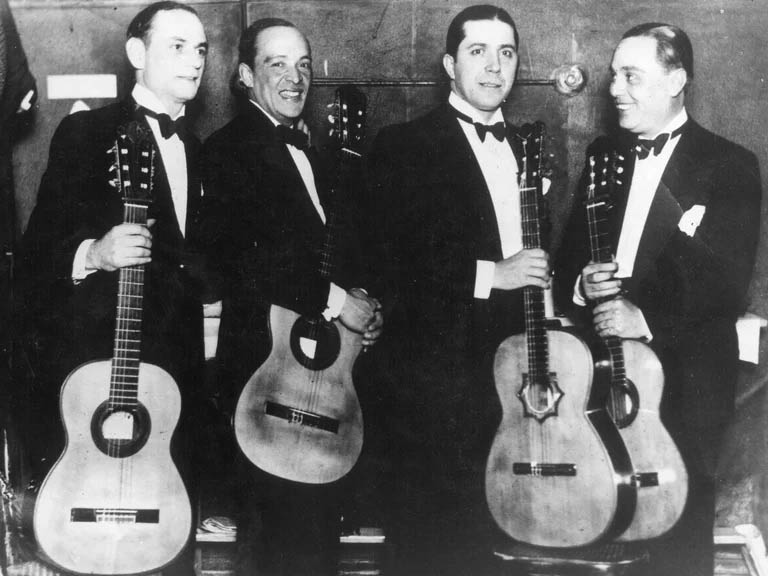
Two months before he died in Medellín, Carlos Gardel landed at La Guaira and spent four weeks singing in Caracas, Maracay, Valencia, Maracaibo and the oil town of Cabimas.
At a glance
- Sailed from New York on the Coamo on 28 March 1935; after Puerto Rico he landed at La Guaira on the Lara on 25 April
- Opened at the Teatro Principal in Caracas, sang for the dictator Juan Vicente Gómez, and toured Valencia, Maracaibo and Cabimas until late May
- In Cabimas, according to Jaime Rico Salazar, the audience wrecked and burned the circus where he had sung
Fuente original: «Por seguir tras de su huella... La gira de Carlos Gardel por Venezuela» (Rico Salazar, Altazor, 1996) · Resumen en español ↓
In the spring of 1935 Carlos Gardel was at the height of his fame. He had been making films in New York, and now he set out on a tour of the Caribbean and northern South America that was meant to take him home to Buenos Aires. He never got there: on 24 June 1935 he was killed in an air crash at Medellín, Colombia. Venezuela was the second country on that last tour. In 1996 the writer Jaime Rico Salazar told the story of the Venezuelan weeks in the newspaper Altazor of Valencia, and the old Club de Tango website reprinted his article. This page follows his account and sets it beside other witnesses and later research. Where only Rico Salazar reports something, we say so. More on the great singers of tango in our artists section.
From New York to Puerto Rico
According to Rico Salazar, Gardel left New York on 28 March 1935 on the Coamo, which he calls a luxury yacht; Walter Santoro, writing in the Montevideo daily La Mañana, describes it as a steamship. With Gardel travelled his lyricist Alfredo Le Pera, who also acted as tour manager, the guitarists Guillermo Barbieri, Riverol and José María Aguilar, his English teacher José Plajas and his secretary Corpas Moreno.
The ship reached San Juan on 1 April, a date Santoro gives as well. Rico Salazar writes that some 40,000 people were waiting; Aguilar, in his recollections on Todotango, estimated twenty to twenty-five thousand. Gardel opened at the Paramount theatre and went on to Mayagüez, Ponce and other towns. A visit planned for ten days grew into three weeks: Santoro counts 24 performances up to 22 April. In Puerto Rico the journalist Alfonso Azaff joined the group as press agent.
Landing at La Guaira
On 25 April Gardel arrived at La Guaira, the port of Caracas, on the motor ship Lara. Santoro confirms the ship and the date and adds that Gardel had boarded on 23 April. From the port the group went up to Caracas by train. Aguilar remembered a special train laid on by the company that had hired Gardel, with people greeting it all along the line.
In Caracas, Rico Salazar writes, the crowd got out of hand. Le Pera was struck by a policeman’s sabre, and when Gardel was put into a car with a canvas top, people cut the roof open with knives to see him, so that he had to walk through the crowd.
The Teatro Principal
Gardel opened the next day at the Teatro Principal, according to Santoro. The theatre, a cinema that had opened on 18 April 1931, records his appearance in April 1935 in its entry on the Cinema Treasures database. As was usual at the time, Rico Salazar notes, the singer shared the bill with a film. He opened with the tango Cobardía and went on to Carnaval, El carretero, Insomnio, Tomo y obligo, Por una cabeza and Mi Buenos Aires querido. Insomnio was a poem by the Spanish-born José Alonso y Trelles, one of the authors in our article on Gardel’s Spanish songwriters.
Rico Salazar counts seven shows at the Principal and one at the Rialto, and a broadcast on the station Broadcasting Caracas. The change of climate affected Gardel’s health, he writes, and some performances had to be cancelled.
A private show for Gómez
Venezuela was then ruled by the dictator Juan Vicente Gómez, who lived in Maracay, two hours from Caracas. In Rico Salazar’s account, Gómez sent for Gardel on a night when he was due at the Teatro Principal, and the singer was driven straight to the old general, who was waiting with about a hundred guests. Knowing Gómez’s passion for cockfighting, Gardel sang Pobre gallo bataraz, a song about an old fighting cock, which Rico Salazar reads as a risky allusion to the aged ruler. Gómez smiled, and paid him 10,000 bolívares, which Gardel accepted so as not to give offence. Back in Caracas the theatre manager had to explain the singer’s absence to his audience.
Aguilar’s memories confirm the core of the story. He placed the performance at the Hotel Jardín, which he called the president’s private residence, and recalled that Gardel opened with Pobre gallo bataraz and closed with two more songs, and that Gómez paid 10,000 bolívares for the three songs. Aguilar also played La cumparsita on the guitar and joked that it was the Uruguayan national anthem.
Valencia, Maracaibo and Cabimas
From Caracas the tour went west. Rico Salazar lists the Teatro Municipal in Valencia and the Teatro Baralt and the Metro in Maracaibo. Santoro sums up the Venezuelan weeks as more than twenty performances in Caracas, Valencia, Maracaibo and Cabimas, until 23 May. Aguilar remembered 22 days in Venezuela.
Cabimas puzzled Rico Salazar. In 1935 it was a small settlement of oil workers on the far shore of the gulf from Maracaibo, two hours away by boat, and he can only explain the booking by a large fee. On 20 May, he writes, Gardel sang at the Circo Internacional until he could sing no more. The audience wanted more, and when the curtain fell they smashed the chairs and set the circus on fire. Gardel and his party slipped back to Maracaibo under cover of darkness. We found no other account of the fire that we could cite; it rests on Rico Salazar’s article.
Curaçao, Aruba and Colombia
From Maracaibo the group crossed to Curaçao. Rico Salazar writes of five nights there, Aguilar of three days. Rico Salazar adds two stories we could not confirm elsewhere: that Gardel gave Gómez’s 10,000 bolívares to Venezuelan exiles organised against the dictatorship on the island, and that he flew to Aruba, his first flight, although he was afraid of aeroplanes.
The tour then continued by sea to Colombia. Rico Salazar has Gardel arrive at Barranquilla on the steamer Presidente Gómez on 4 June, stay at the Hotel del Prado and sing at the Teatro Apolo; a 2026 article by Yasmin Ali on Canal 26 gives the arrival as 5 June. Aguilar recalled Barranquilla, Cartagena, four days in the bullring of Medellín and eight days in Bogotá from 12 June. On 24 June the plane carrying the company crashed at Medellín, killing Gardel and nearly all his companions, Le Pera among them; Aguilar survived. Pablo Taboada’s biography on Todotango gives the same date and place of death.
The Venezuelan weeks were Gardel’s last great triumph before Colombia. Earlier stages of his career are told in our articles on Gardel and Razzano in Azul in 1922 and in our Gardel archive notes.
Sources
- Jaime Rico Salazar, “Por seguir tras de su huella… La gira de Carlos Gardel por Venezuela”, Altazor (Valencia, Venezuela), 31 July 1996; reprinted by Club de Tango. Archived copy on clubdetango.com.ar (archive.org, 2012). The itinerary, companions, songs, theatres, the Gómez evening, Cabimas, Curaçao and Aruba as reported in the text.
- Walter Santoro, “Llegada a Puerto Rico, primer punto de la gira por Latinoamérica”, La Mañana (Montevideo), 3 April 2025 (departure from New York on the Coamo on 28 March; San Juan on 1 April; 24 performances until 22 April; Azaff).
- Walter Santoro, “Gardel arriba a Caracas”, La Mañana (Montevideo), 23 April 2025 (boarding the Lara on 23 April; La Guaira on 25 April; train to Caracas; debut at the Teatro Principal the next day; more than twenty performances in Caracas, Valencia, Maracaibo and Cabimas until 23 May).
- Orlando del Greco, “José María Aguilar”, Todotango (Aguilar’s recollections: crowd in San Juan; special train from La Guaira; 22 days in Venezuela; Gómez at the Hotel Jardín, Pobre gallo bataraz, 10,000 bolívares; Curaçao; Barranquilla, Cartagena, Medellín, Bogotá from 12 June; the crash of 24 June).
- “Teatro Principal, Caracas”, Cinema Treasures (opened 18 April 1931; Gardel appeared there in April 1935).
- Yasmin Ali, “Carlos Gardel y sus últimas funciones”, Canal 26, 2026 (departure 28 March 1935; Puerto Rico extended; Barranquilla on 5 June).
- Alfredo Grimaldos, “Gardel, the greatest flamenco tango man”, Todotango (Le Pera, Gardel’s lyricist, killed with him in the Medellín accident of June 1935).
- Pablo Taboada, “Carlos Gardel”, Todotango (planned tour of 1935; death in Medellín on 24 June 1935).