Manuel Posadas: The Afro-Argentine Violinist Behind a Tango Family
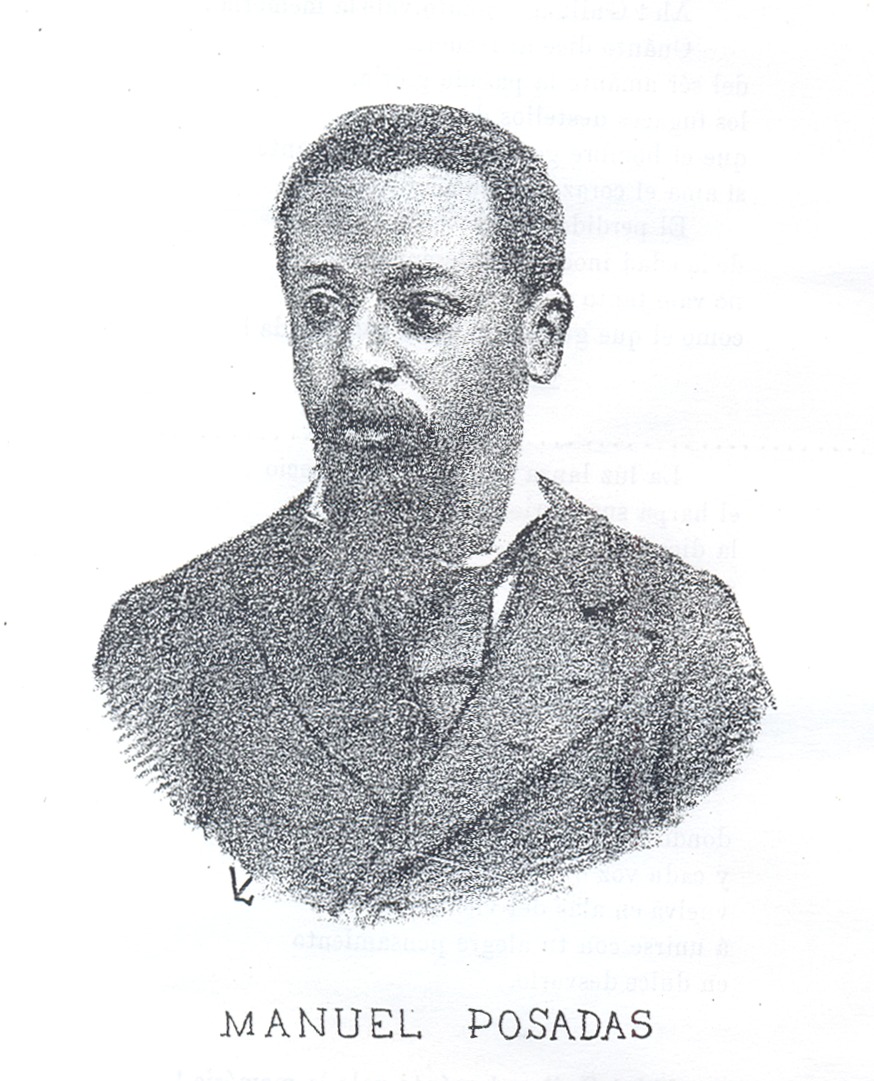
Manuel Posadas, an Afro-Argentine violinist trained in Europe, played first violin at the Teatro Colón and taught both the composer Juan José Castro and his own brother, the tango composer Carlos Posadas.
At a glance
- Born in Buenos Aires in 1860, son of the Afro-Argentine journalist and soldier Manuel G. Posadas; died in 1916
- Trained in Brussels; later first violin of the Teatro Colón and teacher at the Instituto Nacional de Ciegos
- Teacher of the composer Juan José Castro and of his brother, the tango composer Carlos Posadas
Fuente original: «Tangueros de sangre negra: Carlos Posadas» (Ricardo A. Ostuni, Revista Club de Tango, 1994) · Resumen en español ↓
Manuel Posadas was not a tango musician, but tango history leads to him. He was an Afro-Argentine violinist who studied in Europe, played first violin at the Teatro Colón and taught music in Buenos Aires around 1900. His younger brother, Carlos Posadas, became one of the most original composers of early tango, and Manuel was his first teacher. In 1994 the writer Ricardo A. Ostuni published an essay on Carlos in Revista Club de Tango, in a series on tangueros de sangre negra, “tango people of black blood”. Manuel has a paragraph in it, not an article of his own. This page brings together what Ostuni says about him and what independent sources add.
A family of the old Afro-porteño community
Ostuni opens with the black population of the Río de la Plata. Most enslaved Africans brought to Buenos Aires, he writes, came from the Congo and Angola. In 1810 black and mixed-race people made up 29.6% of the city’s population; the municipal census of 1887 counted only 8,005 among about 430,000 inhabitants. The Posadas family belonged to this shrinking community.
The father, Manuel G. Posadas, was, in Ostuni’s words, an Argentine journalist of African origin, born on 18 October 1841. He loved music and took lessons as a teenager, but he was also a soldier. He fought in the war with Paraguay and rose to sergeant, followed Bartolomé Mitre in the revolution of 1874, fought again in 1880 and took up arms in the revolution of 1890. He founded newspapers and wrote regularly for La Nación, the paper Mitre had just launched. His wife, Emilia Smith, was also black. Néstor Pinsón and Bruno Cespi, in their Todotango biography of Carlos, confirm the outline: a music lover active in journalism and politics, a sergeant in the Paraguayan war, a veteran of the revolutions of 1880 and 1890 and loyal to Mitre.
Studies in Brussels
Manuel, the eldest of the musical sons, was born in 1860, fourteen years before Carlos. According to Ostuni, his father, presumably with Mitre’s help, managed to send him to Europe to study with the Belgian violinist Eugène Ysaÿe. Pinsón and Cespi also say that Manuel studied in Belgium with Ysaÿe, and give his dates as 1860–1916.
The ethnomusicologist Norberto Pablo Cirio has studied this European chapter. His article “Piel negra, música blanca” (“Black skin, white music”), presented by the Buenos Aires city institute of ethnomusicology, examines two Afro-porteño musicians who trained in Europe in the second half of the nineteenth century: the violinist Manuel Posadas in Brussels and the composer Zenón Rolón in Florence. It asks how they presented themselves to be accepted by the dominant society, and what their presence there meant.
First violin, teacher, carnival conductor
Back in Buenos Aires, Ostuni writes, Manuel became first violin of the Teatro Colón and a teacher at the Instituto Nacional de Ciegos, the national institute for the blind. His best-known pupil was Juan José Castro, later one of Argentina’s leading composers and conductors. This is confirmed by the musicologist Carmen García Muñoz, who writes that Castro began his violin studies with Manuel Posadas before moving on to Andrés Gaos. In 1938 Castro told the newspaper Crítica that he owed partly to Posadas his habit of approaching music with the respect of a religion, although Posadas had given him only his first lessons in violin and piano.
Manuel also conducted large orchestras for the carnival balls of the early twentieth century. Ostuni quotes the newspaper La Tribuna of 11 February 1903: the Politeama Argentino announced, as a novelty for its coming balls, an orchestra of forty musicians, all of them Argentine, under the direction of maestro Manuel Posadas.
The teacher of Carlos Posadas
It was Manuel who guided Carlos’s first steps on the violin and in composition. Pinsón and Cespi add a less flattering detail: Manuel was strict and bad-tempered, and once broke a violin over his brother’s head when Carlos did not understand an instruction.
The lessons paid off. Carlos Posadas (2 December 1874 – 12 November 1918, dates given by both Ostuni and Todotango) played violin, piano and guitar, was concertmaster of the Teatro Avenida orchestra under maestro Penella around 1917 and taught the guitarist María Luisa Anido. Juan José Castro, Manuel’s pupil, dedicated his tango ¡Qué titeo! to Carlos. Ostuni sees Carlos as the first of a line of tango composers with a rural, campero flavour that continued with Agustín Bardi and, much later, Horacio Salgán.
Dancers know his music better than his name. Ostuni lists recordings by Aníbal Troilo (Cordón de oro in July 1941, El tamango in October 1941, Retirao in 1957), Carlos Di Sarli (El retirao in 1939, his first recording for Victor, and El jagüel in 1943, 1952 and 1956) and Juan D’Arienzo (Cordón de oro, El jagüel and El tamango, all in 1967).
Why the name matters
Manuel Posadas died in 1916, according to Pinsón and Cespi. Ostuni’s essay ends with a cautious judgement: there is no final verdict on the African roots of tango, but many black and mixed-race musicians were involved in its early days, and very few names survived. The Posadas family is one of them. Manuel stands at the point where Afro-Argentine musicians, classical training and early tango meet, which is why he belongs among the tango artists on this site.
Sources
- Ricardo A. Ostuni, “Tangueros de sangre negra: Carlos Posadas”, Revista Club de Tango no. 12, December 1994. Archived copy on clubdetango.com.ar (archive.org, 2012).
- Néstor Pinsón and Bruno Cespi, “Carlos Posadas”, Todotango (Manuel’s dates 1860–1916, studies in Belgium with Ysaÿe, his temper; the father; Carlos’s dates, Teatro Avenida, María Luisa Anido).
- Carmen García Muñoz, “Juan José Castro (1895–1968)”, Cuadernos de Música Iberoamericana vol. 1, 1996 (Castro’s first violin studies with Manuel Posadas; Castro’s recollection in Crítica, 7 August 1938).
- Norberto Pablo Cirio, “Piel negra, música blanca. Músicos y compositores afroporteños en Europa durante la segunda mitad del siglo XIX”, presented on the page “Música académica argentina y latinoamericana” of the Instituto de Investigación en Etnomusicología, Buenos Aires (Manuel Posadas as a violinist trained in Brussels).