Tango in 1913: How a Buenos Aires Newspaper Told Its History
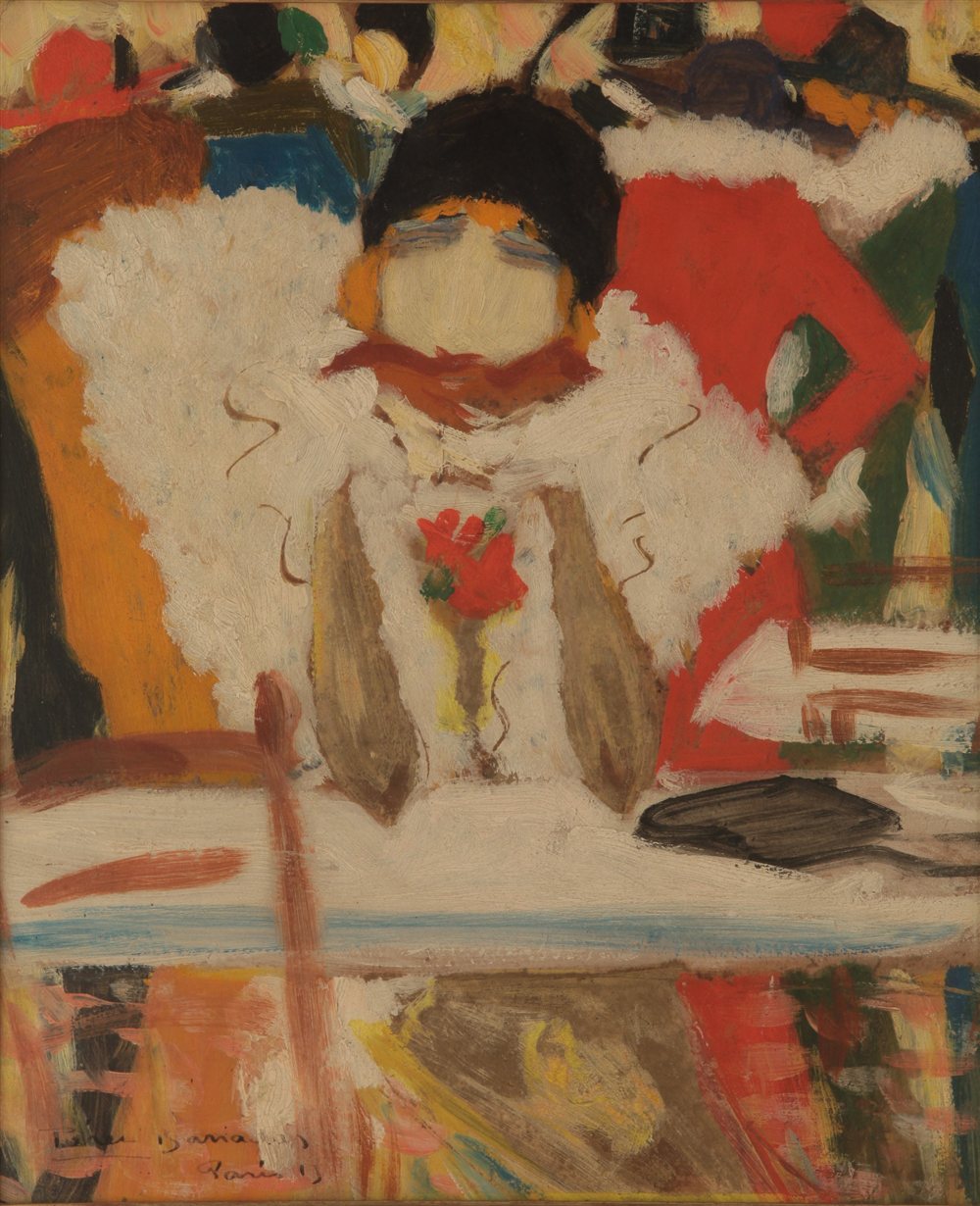
On the night high society first danced tango at the Palace Theatre in 1913, an anonymous writer in the new paper Crítica set out to tell the public where the dance really came from.
At a glance
- Printed in September 1913 by the evening paper Crítica, then about a week old, during a society tango contest at the Palace Theatre
- Dates the birth of tango to 1877 in the southern quarter called the Mondongo, after the Black candombe societies were broken up
- Follows the dance from the academias and peringundines to the city centre after 1880, to the stage, and back from Paris to the salons
Fuente original: «El tango, su evolución y su historia» (Crítica, 1913) · Resumen en español ↓
In 1913 tango was the dance of the moment in Paris, and Buenos Aires society was beginning to accept the music it had long looked down on. That September an evening paper in Buenos Aires printed a long article that claimed to tell, for the first time, the true history of the dance. Its author did not sign it. He wrote in the florid style of the period, half reporter, half storyteller. The article was reprinted in Revista Club de Tango in 2000, and it is still read as one of the earliest attempts at a history of tango. What follows describes what the writer claimed, in our words, with context from later historians. Unless a source is named, the claims are his, not ours.
A new paper and a society contest
The archived reprint names neither the newspaper nor the author, but the text is usually cited as an article from the newspaper Crítica of 23 September 1913. Crítica, founded by Natalio Botana, had first gone on sale on the afternoon of Monday 15 September 1913, according to Pablo Mendelevich in La Nación. The tango article therefore appeared when the paper was about a week old.
The article ends by announcing a tango contest “tonight” at the Palace Theatre. The historian Monica Fumagalli, in a 2019 article in the University of Milan journal CRIANDO, describes that contest: it opened on 22 September 1913 at the Palace Theatre on Corrientes street, sponsored by the Sociedad Sportiva Argentina of Baron Antonio De Marchi, with 62 tangos and six dancing couples competing under strict rules. Fumagalli quotes the article’s last sentence and attributes it to “Viejo Tanguero”, the anonymous columnist of Crítica whom tango scholars regard as the first historian of tango. She takes the quotation from Juan Manuel Peña (Tango Reporter, 2007). Since the contest ran over more than one evening, the article may have appeared on the opening day, the 22nd, or on the 23rd, the date under which it is usually cited. We could not check the original newspaper.
1877: the Mondongo
The writer begins with a confession that tango was born “by accident”, as something ugly that only later became seductive. He then gives a precise date. In 1877, he says, the candombe societies of the city’s Black population had their headquarters in the southern quarter then known as the Mondongo. At carnival they paraded in loud costumes and plumed hats, and their rivalries ended in bloody street fights. The authorities dissolved the societies and closed their candombes.
The same people then opened dance halls, and in his account this is where tango was born, though very different from the tango of 1913: the couples moved apart in time to the music, imitating the gestures of the old candombe. The compadritos of the outskirts took the new dance to the cattle-yard district, where the peringundines, rough dance halls, already played the milonga. Soon, he writes, the best dancer was considered the bravest man.
The academias
From there, in his telling, tango moved into the academias, dance houses in Barracas and at the corners of Solís and Comercio, Solís and Estados Unidos, and Pozos and Independencia. The last was the most famous. He lists the women who ruled its floor by their nicknames and claims that young men of good family, future officials, deputies and officers, competed there with the local toughs. He names a police chief, Villamayor of the 18th precinct, who searched every guest for weapons, and he retells, from an old policeman, the story of a knife duel outside the door. The academia was closed after too many fights.
Before the academias, he says, there were the peringundines, such as the one under the arcades of the old Plaza Lorea, where a dancer named Carmen Gómez was famous and soldiers from a nearby infantry barracks fought with carters and compadritos.
1880: into the centre
After the revolution of 1880, the writer continues, tango reached the city centre. Dance houses were officially banned, but some opened around Corrientes street, with a barrel organ covered by a mattress so the police would not hear it. He names the Stella di Roma at Corrientes and Uruguay, the Scudo de Italia, where the Teatro Apolo later stood, and others. Because many of the girls there were Italian and did not move like the local dancers, a smoother style developed, which he calls tango liso. Later the Politeama and the Skating Rink put tango on stage for two years, until it faded and the dancers scattered to La Plata and the province.
For the music he names two pioneers, the Black violinist Casimiro and the mulatto clarinettist Sinforoso, and praises Bevilacqua, Pérez Freire and Solá as composers who kept to the true style. We found no independent account of Casimiro and Sinforoso that we could cite, so these remain the 1913 writer’s claims.
Paris and the salons
The writer’s real subject is 1913 itself. Tango, he says, has crossed the Atlantic, conquered Europe and come back home in purple robes and cardboard laurels. He is mocking the rush of his own city’s elite to embrace a dance it had condemned for twenty years.
Later historians confirm the European side of the story. Néstor Pinsón, on Todotango, traces tango in Paris from around 1906 and calls 1913, when Celestino Ferrer, Vicente Loduca, Eduardo Monelos and the dancer Casimiro Aín arrived, the turning point of its conquest. A 2001 article in La Nación describes how the Buenos Aires upper class, faced with the success of tango in the French salons, chose to accept the softened version that came back from Paris. José Gobello and Néstor Pinsón, also on Todotango, add that Vicente Greco and Francisco Canaro were invited to play at grand houses after the Palace contest. Recordings had helped tango travel, a story told in our article on the phonograph and the gramophone.
A lesson in style
The article closes with a dance critic’s warning. Many of the new dancers, he complains, do not keep time. Each figure must end with the musical phrase, the knee flexion must be right, the woman must master the double step backwards, and the hold matters. He promises to judge whether the Palace contestants get it right. The old tango, he concludes, enters the aristocratic stage that night in tailcoat and gloves, like Gounod’s Faust made young again.
Read today, the text mixes memory, gossip and police anecdote, and its precise dates cannot be checked. Its value lies elsewhere: it shows how tango’s past was told at the very moment of its social triumph. More than seventy years later, Tomás Barna would invoke Paris in 1913 again when he explained the tango revival of the 1980s. More on the early years in our tango history section.
Sources
- Anonymous (attributed by Fumagalli to “Viejo Tanguero”), “El tango, su evolución y su historia”, Crítica, September 1913; reprinted in Revista Club de Tango no. 43, July–August 2000. Archived copy on clubdetango.com.ar (archive.org, 2009). All claims about tango’s history before 1913 in this article come from this text.
- Monica Fumagalli, “Il tango nella Milano del primo Novecento: lo strano caso del barone De Marchi”, CRIANDO no. IV, Università degli Studi di Milano, 2019 (Palace Theatre contest from 22 September 1913, Sociedad Sportiva Argentina, 62 tangos and six couples; attribution of the article’s closing line to “Viejo Tanguero” of Crítica, after Juan Manuel Peña, Tango Reporter no. 128, 2007).
- Pablo Mendelevich, “Crítica, el diario que se convirtió en leyenda”, La Nación, 14 September 2013 (first issue of Crítica on 15 September 1913, Natalio Botana, evening paper).
- Néstor Pinsón, “From La morocha to El Garrón: Tango conquers Paris”, Todotango (tango in Paris from 1906; 1913 as the turning point; Ferrer, Loduca, Monelos, Aín).
- José Gobello and Néstor Pinsón, “A Baron and a Pope in the social ascent of tango”, Todotango (Baron De Marchi, the Sociedad Sportiva, the Palace contest at Corrientes 757, Greco and Canaro invited to society parties).
- “Primer tango en París”, La Nación, 9 December 2001 (the Buenos Aires elite accepting the tango that returned from Paris).