Francisco Rotundo: An Orchestra Built for Its Singers
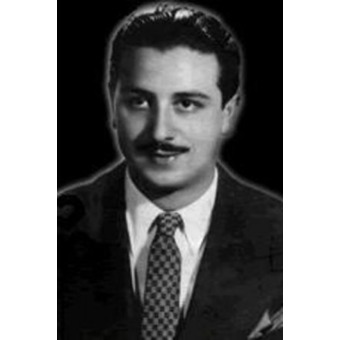
In 1998, forty years after disbanding his orchestra, Francisco Rotundo told Revista Club de Tango how a neighbourhood band became the orchestra of Floreal Ruiz, Enrique Campos and Julio Sosa.
At a glance
- Born on 4 November 1919 in Belgrano, Buenos Aires; pianist, bandleader and composer
- Orchestra from about 1938 to 1957; first bandoneon and arranger: Ernesto "Titi" Rossi
- Singers included Carlos Roldán, Floreal Ruiz, Enrique Campos and Julio Sosa; recorded on 78 rpm discs that are still reissued
Fuente original: «Entrevista a Francisco Rotundo» (Hernán Volpe, Revista Club de Tango, 1998) · Resumen en español ↓
Francisco Rotundo was one of the tango artists who built an orchestra around voices. It never developed a sound as recognisable as Pugliese’s, D’Arienzo’s or Troilo’s. Its strength was elsewhere: for almost twenty years it was built around its singers, and some of the best voices of the 1940s and 1950s passed through it. In 1957 Rotundo disbanded it and left music. Forty years later the journalist Hernán Volpe visited him at home in the Buenos Aires neighbourhood of Núñez for Revista Club de Tango. Rotundo, then planning a comeback, went over the story over a coffee.
From the neighbourhood club to the dance halls
Rotundo dated the beginning to “around 1938”. Nobody in the band was a professional. They played on Saturdays at the club in their neighbourhood. When the club held an orchestra contest and his band won, he decided to hire professional musicians and a singer, Carlos Roldán. “That is how it all began,” he told Volpe. According to the tango historian Abel Palermo, he formed his first group at seventeen and in 1944 won a contest of orquestas típicas at the Palermo Palace dance hall.
Hiring Floreal Ruiz
Roldán was popular with the audience, but the orchestra played only three or four dances a month, and that could not last. Rotundo told his friend Titi Rossi, his first bandoneon and arranger, that he wanted to hire Floreal Ruiz, who was then singing with Aníbal Troilo. Rossi thought he was mad. But the offer was hard to refuse: 100,000 pesos for a forty-month contract. After some back and forth Ruiz accepted, and the bookings followed at once. From three dances a month the orchestra went to twenty.
Enrique Campos joined later, in four separate periods. Rotundo valued him as a singer with a sure instinct for choosing a repertoire that worked. In the orchestra’s last two years the singer was Julio Sosa. “What can I say about him? Everyone knows. It was a privilege to have him in my orchestra.” All quotations here are our English translation.
Abel Palermo adds that the orchestra recorded for Pampa, a label of the Odeon company, that it played at the Café Nacional on Avenida Corrientes from 1947, and that Luis Stazo was among its bandoneon players. His dates for the singers differ a little from Rotundo’s memory: Floreal Ruiz from 1949 to 1957, Enrique Campos from 1952, Julio Sosa from 1953 for about two years, and Jorge Durán from the end of 1955.
The recordings he remembered
Asked about his hit records, Rotundo named five:
- El viejo vals, sung as a duet by Floreal Ruiz and Enrique Campos. He called it a real find: the singer Charlo had written it, but it was practically unknown, because Charlo’s own version had gone unnoticed.
- Justo el 31, with Julio Sosa.
- Llorando la carta, with Enrique Campos.
- Un infierno, his own tango with lyrics by Reynaldo Yiso, sung by Floreal Ruiz.
- El vinacho, which Carlos Roldán introduced.
For dancers, these are a good way into the orchestra. As Volpe notes, Rotundo’s arrangements are compact and stay at the service of the voice.
Admirations and friendships
Musically, Rotundo said, he admired Horacio Salgán, as a musician and as a person, but his own taste was closest to the orchestra of Aníbal Troilo. Among the bandleaders of his time there was great mutual respect. He saw Juan D’Arienzo and Troilo regularly, ran into Osvaldo Pugliese in the neighbourhood, and counted Héctor Varela and Titi Rossi as his closest friends.
Plans for a comeback
In 1998 Rotundo wanted to work again. Times were difficult, he said, so he planned carefully: first a tango nightclub with a show, and if that went well, a larger ensemble, up to the full orchestra. He ended by inviting readers to come to the club, if he was lucky enough to open it soon.
Sources
- Hernán Volpe, “Entrevista a Francisco Rotundo”, Revista Club de Tango no. 28, January–February 1998. Archived copy on clubdetango.com.ar (archive.org, 2012).
- Abel Palermo, “Francisco Rotundo”, Todotango (birth, first group at seventeen, the Palermo Palace contest of 1944, Pampa/Odeon, Café Nacional, the singers’ dates).