Jorge Durán: From Folk Songs to Carlos Di Sarli's Baritone
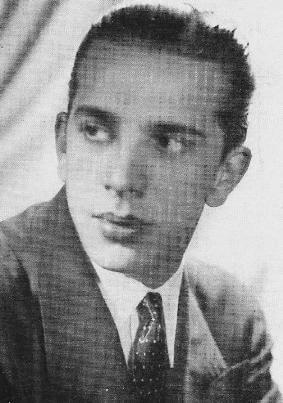
Jorge Durán came from the vineyards of San Juan, sang folk songs before tango, made his first tango records with Emilio Balcarce and found his best years with Carlos Di Sarli.
At a glance
- Born Alfonso Jesús Durán on 19 January 1924 in the province of San Juan (in Albardón, according to Orlando Navarro); died on 20 August 1989
- First recordings in 1944 as Alfonso Durán, with Buenaventura Luna's folk group; first tangos the same year with Emilio Balcarce's orchestra
- Baritone of Carlos Di Sarli in two periods, with 19 recordings from 1956 to 1958; also sang with José Basso, Horacio Salgán, Francisco Rotundo and Armando Pontier
Fuente original: «Emilio Balcarce» (Revista Club de Tango, 1997 (artículo sobre Emilio Balcarce)) · Resumen en español ↓
Jorge Durán is one of the voices dancers meet in the late recordings of Carlos Di Sarli, yet his name is far less familiar than his singing. The tango historian Néstor Pinsón thought he deserved much wider fame. The old Club de Tango page that pointed readers to him is in fact an article about the arranger Emilio Balcarce, published in Revista Club de Tango in 1997, and it mentions Durán only once: after parting with the singer Alberto Castillo, Balcarce led the orchestra under his own name and hired “the singer Jorge Durán” (our translation). Everything else on this page comes from independent sources, named in the text.
From the vineyards of San Juan
According to Pinsón’s biography on Todotango, Durán was born Alfonso Jesús Durán on 19 January 1924 in San Juan, in the west of Argentina. The journalist Orlando Navarro, writing in the San Juan newspaper Diario de Cuyo in 2019, names the town as Albardón. His parents were Andalusian immigrants who grew fruit and ran a small wine cellar, and the family sang together. A music teacher at school advised him to study singing.
In 1942 the family settled in Buenos Aires. Durán sang in neighbourhood venues and tearooms, where the bandoneonist Jorge Argentino Fernández heard him and took him to Radio Mitre with his orchestra.
Folk songs first
His first records were not tangos. In the 1940s, Navarro explains, the poet and musician Buenaventura Luna was promoting the folk music of the Cuyo region in Buenos Aires. Durán joined his group, La Tropilla de Huachi Pampa, under the name Alfonso Durán. Pinsón gives the dates of his first two recordings in 1944: the zamba (a folk dance in 6/8) Zamba del gaucho on 13 March and En las sombras on 19 September. According to Navarro, it was his friends Roberto Rufino and Alberto Marino, both tango singers, who persuaded him to turn to tango.
With Emilio Balcarce
That turn led him to Emilio Balcarce. In an interview with Alberto Rasore and José Pedro Aresi for Todotango, Balcarce recalled that Durán was the singer of his orchestra in 1944. With it, Pinsón writes, Durán recorded his first tangos, Mi Buenos Aires querido and Me están sobrando las penas. The 1997 Club de Tango article adds only that Balcarce later shared the vocal duties with Amadeo Mandarino.
Carlos Di Sarli and a new name
Carlos Di Sarli heard Durán in a nightclub and hired him on the spot. Navarro and Pinsón tell the same story of the switch: on one day Durán sang with Balcarce on Radio Belgrano in the afternoon and made his debut with Di Sarli on Radio El Mundo that night. Di Sarli asked him to sing a tone higher, which he managed easily, and changed his first name: Alfonso became Jorge. Pinsón calls these two years the most brilliant stage of his career.
The nickname came from the same orchestra. According to Pinsón, Durán turned up for his first session in a grey suit with wide lapels and broad shoulders, and the bandoneonist Juan Carlos Bera remarked that he looked like a cajón, a box, or in slang a coffin. He was “Cajón” from then on.
A singer on the move
Pinsón follows him through many orchestras. In 1947 he joined Pedro Laurenz, without recording, and then Horacio Salgán, with whom he recorded three numbers. From 1950 he spent three years with José Basso and recorded twelve tracks. In 1954 he made a single recording with Osmar Maderna’s Orquesta Símbolo, and in 1955 two with the orchestra of Francisco Rotundo.
On 26 April 1956 he began his second period with Di Sarli, which lasted until 1958 and produced nineteen recordings. For dancers this is the Durán they know best: the lush, slow-pulsing Di Sarli of the late 1950s, with a warm baritone on top.
In 1959 he formed his own orchestra with his friend Roberto Florio, conducted by the pianist Orlando Trípodi. In 1962 he returned to Basso, and in 1968 he sang with Armando Pontier. In 1970 he recorded with Oscar de la Fuente, and in 1971 he made his last recording, a cassette of twelve songs with the guitarists Juan Carlos Gorrías, Domingo Laine, Rubén Morán and Héctor Estela.
The voice
Pinsón describes Durán as a baritone who gave his interpretations stamina and drama but never fell into excess; Navarro uses almost the same words. An attentive listener, Pinsón adds, hears a romantic lament in that drama. Durán kept singing to the end. He died on 20 August 1989; Pinsón attributes his death to emphysema, linked to heavy smoking. His career is a good example of how many tango artists of the 1940s and 1950s moved from orchestra to orchestra and are remembered today mainly through a handful of records.
Sources
- “Emilio Balcarce”, Revista Club de Tango no. 26, September–October 1997 (mentions Durán once). Archived copy on clubdetango.com.ar (archive.org, 2012).
- Néstor Pinsón, “Jorge Durán”, Todotango (real name, birth and death dates, family, Jorge Argentino Fernández and Radio Mitre, the 1944 folk recordings, the Balcarce recordings, Di Sarli and the name change, the nickname, all later orchestras and dates, his voice, cause of death).
- Orlando Navarro, “Jorge Durán, cantor de tangos”, Diario de Cuyo, 4 May 2019 (birthplace Albardón, Buenaventura Luna and the name Alfonso Durán, Rufino and Marino, the day he moved from Balcarce to Di Sarli).
- Alberto Rasore and José Pedro Aresi, “Interview to Emilio Balcarce”, Todotango (Durán as Balcarce’s singer in 1944).