The Spaniards in Gardel's Songbook: Authors and Recordings
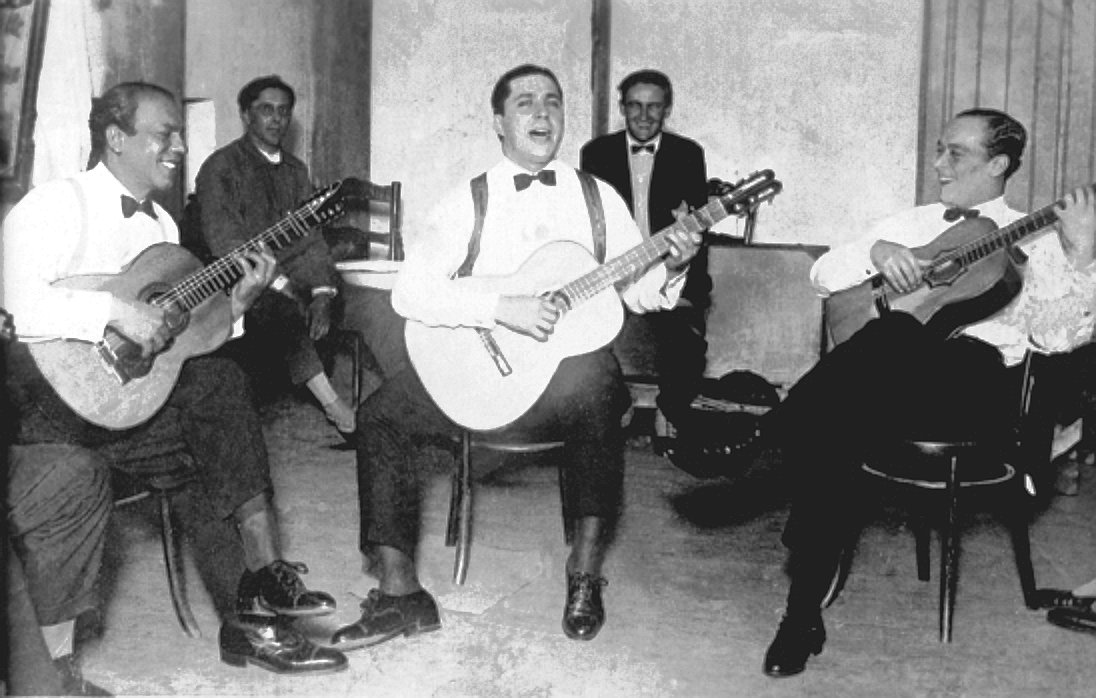
From Manuel Jovés and Antonio Viergol in Buenos Aires to the Barcelona sessions of 1927 and 1928, a surprising share of Carlos Gardel's songs came from Spanish-born authors.
At a glance
- The Catalan pianist Manuel Jovés wrote the music of seven tangos Gardel recorded, among them Loca (1922, lyrics by the Madrid-born Antonio Viergol) and Buenos Aires (1923)
- In Spain Gardel took up new songs by local authors: Dolor by Teodoro Diez Cepeda and José Pérez Moris, Por un cariño by Gerardo Alcázar
- Madre hay una sola (lyrics by José de la Vega, born in Barcelona in 1892) and Palermo (Villalba, Braga and Delfino) also came from Spanish-born authors
Fuente original: «Autores españoles que grabó Gardel» (Himschoot, Club de Tango, 2002) · Resumen en español ↓
Carlos Gardel is the voice of Buenos Aires, but a surprising share of the songs he recorded was written by men born in Spain. Some had arrived in Argentina or Uruguay as children or young musicians and wrote tangos like any porteño. Others he met on his tours of Spain, where they handed him new songs in theatres and recording studios. In 2002 the researcher Oscar B. Himschoot published a list of these “Spanish authors whom Gardel recorded” on the old Club de Tango website, with short biographies and recording dates. This article selects the most important names from that list, groups them, and checks them against independent sources. Where only Himschoot gives a date, we say so. More portraits of tango composers and singers are in our artists section.
The Spaniards of Buenos Aires
The most important Spanish name in Gardel’s early solo repertoire is Manuel Jovés, a pianist from Manresa near Barcelona. According to the Biografías y Vidas encyclopedia, he was born in 1886, settled in Buenos Aires in 1911 (perhaps as early as 1908) and died there in 1927. Gardel recorded seven of his tangos: Loca, with lyrics by Antonio Viergol, and six with lyrics by Manuel Romero, among them Patotero sentimental, La provinciana, Pobre milonga, Nubes de humo, Corazón de arrabal and Buenos Aires.
The discography of the Museo Casa Carlos Gardel in Buenos Aires confirms the core of this. It lists Loca and La provinciana among Gardel’s recordings of 1922 and Buenos Aires, Pobre milonga and Nubes de humo among those of 1923, and it calls Jovés a Catalan pianist, composer and conductor. Himschoot adds that Gardel returned to Buenos Aires twice in 1930, once with his guitarists and once with Rodolfo Biagi at the piano.
Antonio Viergol, born in Madrid in 1872, was a man of the theatre. The museum’s 1922 list names him as lyricist of three Gardel recordings that year: Loca, the tango Porotita with music by Enrique Delfino, and the shimmy Yo no puedo vivir sin amor by the French composers Charles Gabaroche and Fred Pearly. The same list shows El taita del arrabal, a tango by Luis Bayón Herrera and Manuel Romero with music by José Padilla, the composer from Almería who later wrote the pasodoble Valencia. A short biography on the tourism site My Almería says Padilla first travelled to Argentina in 1915, staged the sainete El taita del arrabal on a later visit and became Gardel’s friend in Paris. It gives his birth date as 28 May 1889; Himschoot has 23 May.
The light genres of the early 1920s also came partly from Spain. The museum lists the shimmy Nerón (1923) with words by the Madrid-born Cancio Millán, and the fado De mi tierra (1921) by Francisco Lozano and Eduardo Moreno Manella, both described there as Spanish authors. Himschoot notes that Gardel sang it with new words by Pedro Numa Córdoba.
Spaniards in Montevideo
Several of Himschoot’s authors lived across the River Plate. Víctor Soliño, born in Bayona near Vigo on 10 September 1897, came to Montevideo as a baby, according to Horacio Ferrer’s biography on Todotango, and wrote many hits with Gerardo Matos Rodríguez. One of them, the tango Mocosita, was recorded by Gardel in 1926, according to Himschoot. Himschoot adds that Soliño’s songs were also recorded by Rosita Quiroga, Agustín Magaldi and Tita Merello.
From the older generation Himschoot names José Alonso y Trelles, the poet known as “El Viejo Pancho”, born in Asturias in 1857 and later settled in Uruguay. Gardel sang several of his poems set to music by the Uruguayan guitarist Américo Chiriff, among them Insomnio and Misterio. Insomnio was still in his programme in 1935, when he sang it on his tour of Venezuela.
Songs from Spain
Gardel first sang in Spain with a theatre company in the 1920s. Pablo Taboada’s biography on Todotango places his appearance at the Teatro Goya in Barcelona on 5 November 1925, and his return to Spain in November 1927, followed in January 1928 by radio work, recordings in Barcelona and a tour of the whole country. Spanish authors brought him new songs on both trips.
The Madrid pianist Teodoro Diez Cepeda told Orlando del Greco, in a biography now on Todotango, that he met Gardel at the Romea theatre in Madrid in 1926 and brought him four tangos written with the playwright José Pérez Moris. Gardel chose Dolor, and it became a hit in his voice; he recorded nothing else by Diez Cepeda. Himschoot dates the recording to 9 January 1926 in Spain. The Barcelona lyricist Gerardo Alcázar, whose real name was Gerardo Coll Jarque, met Gardel at the Odeon studios in Barcelona, according to Del Greco. He gave him Por un cariño, which Gardel premiered at the Teatro Barcelona and recorded soon after, and Oiga patrón, whose recording was defective and never issued.
For the second trip Himschoot lists a cluster of recordings, all made with the guitarists José Ricardo and Guillermo Barbieri: La cieguita, by Ramón Bertrán Reyna “Ramuncho” with music by Kepler Lais, and No llores más, by the brothers Alejandro and Ramón Gutiérrez del Barrio, both on 17 December 1927, and La gloria del águila, by Enrique Nieto de Molina and Monserrat Guillemet, on 14 January 1928.
Himschoot also places two recordings in Spain on 23 July 1932, with piano and violin instead of guitars: Julio Falcón’s Cara rota and Modesto Romero’s ¡Por favor, dejame! We could not confirm a stay in Spain in 1932. Juan Manuel Peña, author of a book on tango in Spain, lists 1932 on Todotango only as a possible fourth visit, so these two dates remain uncertain.
Back in Buenos Aires
Spanish-born authors also gave Gardel some of his lasting Buenos Aires tangos. Madre hay una sola has lyrics by José de la Vega, born in Barcelona on 26 January 1892, who came to Argentina in 1912 and died in Buenos Aires in 1954, according to Del Greco’s biography on Todotango. Its music is by Agustín Bardi, and Del Greco says the song lives on through Gardel’s recording. Himschoot dates that recording to Paris, 28 May 1931.
Palermo, the racing tango by Juan Villalba and Hermido Braga with music by Enrique Delfino, was written for the sainete El bajo está de fiesta and became known worldwide through Gardel, according to Del Greco’s biography of Braga. Himschoot names Villalba as the Spaniard, born in Cádiz in 1898, and dates the recording to 23 October 1929, with José María Aguilar and Barbieri on guitars. From the following year he lists Llevame carretero by the Galician guitarist Manuel Parada and La última ronda by Francisco Lozano, both on 4 November 1930, and the pasodoble Las flores de tu balcón by the Navarrese guitarist Fernando Catalán on 1 December 1930.
Reading the list with care
Himschoot’s list is a valuable map, but it has slips. It gives José de la Vega’s birth year correctly as 1892 in his own entry and as 1912 in another; it has the lyricist of Dejá el conventillo, Francisco Ruiz París, born in 1833, which cannot be right; it calls La hija de la japonesita both a fox-trot and a tango and counts two recordings in one entry and three in another. We have left out such details unless another source settles them. The list’s main point stands: Spain was one of the deepest sources of the songs Gardel sang, from the Catalan Jovés in 1922 to the Barcelona sessions at the end of the decade. For Gardel’s other paths through the archive, see our notes on the Gardel–Razzano duo in Azul in 1922 and our Gardel archive notes.
Sources
- Oscar B. Himschoot, “Autores españoles que grabó Gardel”, Club de Tango, 2002. Archived copy on clubdetango.com.ar (archive.org, 2013). The list of authors and all recording dates attributed to Himschoot in the text.
- Museo Casa Carlos Gardel (Buenos Aires), discography: “Grabaciones de 1921” (De mi tierra, Lozano and Manella), “Grabaciones de 1922” (Loca, La provinciana, El taita del arrabal, Porotita, Yo no puedo vivir sin amor; Viergol and Jovés as Spaniards), “Grabaciones de 1923” (Buenos Aires, Pobre milonga, Nubes de humo, Nerón).
- Tomás Fernández and Elena Tamaro, “Manuel Jovés”, Biografías y Vidas, 2004 (Manresa 1886, Buenos Aires 1911 or 1908, died 1927; the seven tangos Gardel recorded).
- “Maestro Padilla”, My Almería (José Padilla, Almería 28 May 1889 – Madrid 1960; Argentina from 1915; El taita del arrabal; friendship with Gardel in Paris).
- Horacio Ferrer, “Víctor Soliño”, Todotango, from El libro del tango (Bayona, 10 September 1897; family to Montevideo; Mocosita with Matos Rodríguez).
- Pablo Taboada, “Carlos Gardel”, Todotango (Teatro Goya, Barcelona, 5 November 1925; return to Spain November 1927; Barcelona recordings January 1928).
- Orlando del Greco, Todotango biographies: “Teodoro Diez Cepeda” (Madrid 1896; meeting at the Romea in 1926; Dolor with Pérez Moris), “Gerardo Alcázar” (Gerardo Coll Jarque, Barcelona 1898–1975; Por un cariño, Oiga patrón), “José de la Vega” (Barcelona 1892 – Buenos Aires 1954; arrival 1912; Madre hay una sola), “Hermido Braga” (Palermo with Villalba and Delfino for El bajo está de fiesta).
- Juan Manuel Peña, “Tango in Spain”, Todotango (Gardel’s visits to Spain: 1923, 1925–26, 1927–28 and possibly 1932).